Declaration of Independence - Beyond the Fourth of July
In 1776, Thomas Jefferson wrote that all men are created equal and entitled to life, liberty, and the pursuit of happiness, in one of the most famous documents ever written – the Declaration of Independence. In the subsequent two and a half centuries, suffragists, abolitionists, preachers, and revolutionaries an ocean away, have all returned to the same words, to support a quest for freedom. This essay follows that promise across time and geography — from Seneca Falls to Peoria, to Gettysburg to Hanoi.
When in the Course of human events, it becomes necessary for one people to dissolve the political bands which have connected them with another, and to assume among the powers of the earth, the separate and equal station to which the Laws of Nature and of Nature's God entitle them, a decent respect to the opinions of mankind requires that they should declare the causes which impel them to the separation.
We hold these truths to be self-evident, that all men are created equal, that they are endowed by their Creator with certain unalienable Rights, that among these are Life, Liberty and the pursuit of Happiness.
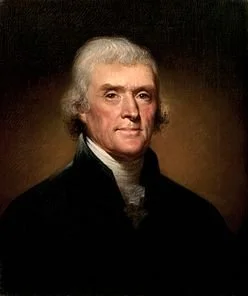
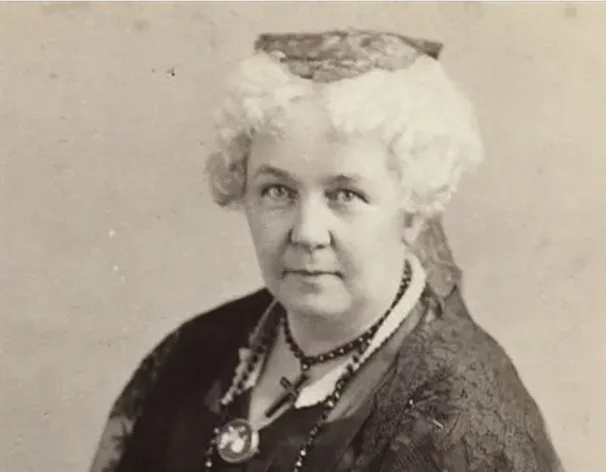
Those words, which were the basis for the founding of the United States in 1776, have served as the inspiration for many freedom movements.
Women’s Suffrage - 1848
Suffragette Elizabeth Cody Stanton presented The Declaration of Sentiments at the Seneca Falls Convention in 1848. She modeled it on the Declaration of Independence. It started as follows:
When, in the course of human events, it becomes necessary for one portion of the family of man to assume among the people of the earth a position different from that which they have hitherto occupied, but one to which the laws of nature and of nature's God entitle them, a decent respect to the opinions of mankind requires that they should declare the causes that impel them to such a course.
We hold these truths to be self-evident; that all men and women are created equal; that they are endowed by their Creator with certain inalienable rights; that among these are life, liberty, and the pursuit of happiness;
This declaration launched the suffrage movement. Wyoming was the first state to award women the vote in 1890, followed by Colorado in 1893. The movement succeeded in fifteen states before the 19th Amendment made it the law of the land in 1920.
Frederick Douglass – What to the Slave Is the Fourth of July?
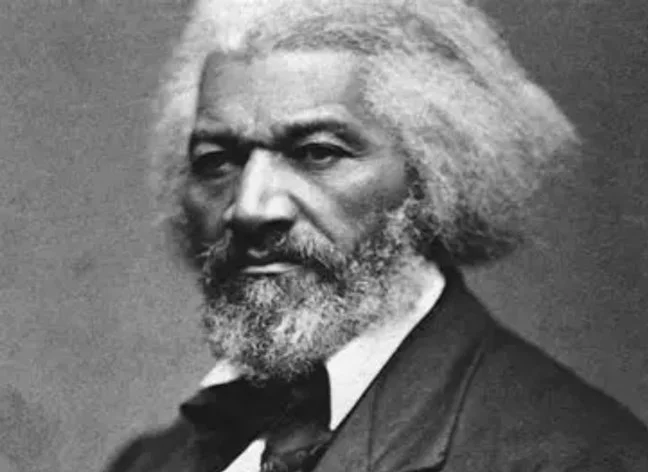
Douglass was born into slavery in 1818. He escaped when he was twenty years old. He became legally free when British supporters raised money to formally purchase his freedom from his American owner. He became an influential abolitionist, speaking widely against slavery.
The Rochester Ladies' Anti-Slavery Society invited him to speak at their 1852 Fourth of July commemoration. He stated that slavery was a direct contradiction to the nation’s founding principles as expressed in the Declaration of Independence. Some excerpts from his speech:
Are the great principles of political freedom and of natural justice, embodied in that Declaration of Independence, extended to us?
Would to God, both for your sakes and ours, that an affirmative answer could be truthfully returned to these questions!
I am not included within the pale of this glorious anniversary! Your high independence only reveals the immeasurable distance between us. The blessings in which you, this day, rejoice, are not enjoyed in common. The rich inheritance of justice, liberty, prosperity and independence, bequeathed by your fathers, is shared by you, not by me.
What, to the American slave, is your 4th of July? I answer: a day that reveals to him, more than all other days in the year, the gross injustice and cruelly to which he is the constant victim.
Abraham Lincoln – 1854 Peoria Speech Re-entering Politics
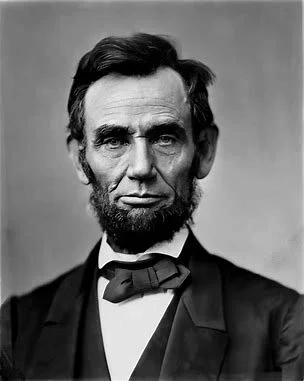
Lincoln served one term in Congress from 1847 to 1849, then retired from politics. He re-entered politics in 1854, angered by the passage of the Kansas-Nebraska Act, which allowed expansion of slavery into those territories. His Peoria speech in Peoria, Illinois opposing the spread of slavery relied on the Declaration of Independence.
He explained that limits on the expansion of slavery began with the Northwest Ordinance of 1787, which banned slavery in the territories that would eventually become the states of Ohio, Michigan, Indiana, Illinois, and Wisconsin. Ironically, Thomas Jefferson, a slave holder, was the author of that law. As Lincoln said:
Thus, with the author of the Declaration of Independence, the policy of prohibiting slavery in new territory originated.
Lincoln goes on to read from the Declaration:
That to secure these rights, governments are instituted among men, deriving their just powers from the consent of the governed.
I have quoted so much at this time merely to show that according to our ancient faith, the just powers of governments are derived from the consent of the governed. Now the relation of masters and slaves is…a total violation of this principle. The master not only governs the slave without his consent; but he governs him by a set of rules altogether different from those which he prescribes for himself.
Near eighty years ago we began by declaring that all men are created equal; but now from that beginning we have run down to the other declaration, that for some men to enslave others is a "sacred right of self-government." These principles can not stand together. They are as opposite as God and mammon; and whoever holds to the one, must despise the other.
Let us re-adopt the Declaration of Independence, and with it, the practices, and policy, which harmonize with it. Let north and south---let all Americans---let all lovers of liberty everywhere---join in the great and good work. If we do this, we shall not only have saved the Union; but we shall have so saved it, as to make, and to keep it, forever worthy of the saving.
Abraham Lincoln – Gettysburg Address – 1863
Lincoln delivered the Gettysburg Address on November 19, 1863, at the dedication of the Soldiers' National Cemetery in Gettysburg, Pennsylvania. The Declaration is the basis for his address:
Four score and seven years ago our fathers brought forth on this continent a new nation, conceived in liberty and dedicated to the proposition that all men are created equal.
And Concludes:
…that this nation, under God, shall have a new birth of freedom, and that government of the people, by the people, for the people, shall not perish from the earth.
Four score and seven years ago, from 1863, is 1776, the year of the Declaration of Independence, in Lincoln’s mind, the founding document and founding principles of the United States, those being that all men are created equal and government requires the consent of those governed.
Ho Chi Minh – 1945
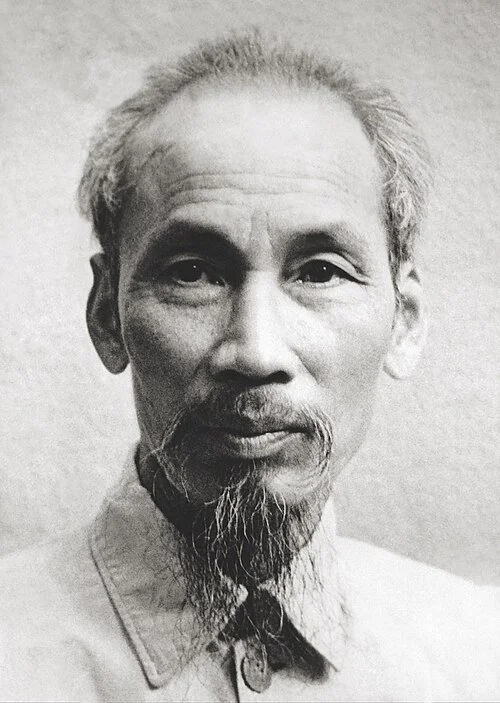
France colonized Vietnam in the mid 1800s. Ho Chi Minh led the effort to free the country. President Woodrow Wilson, despite his claims to support ‘self-determination,’ ignored Vietnam’s petition for freedom during the negotiations over the 1919 Treaty of Versailles. Japan had occupied Vietnam during World War II. When Japan surrendered to the U.S. on September 2, 1945, Ho Chi Minh issued Vietnam’s own declaration of independence, directly quoting from America’s own declaration:
All men are created equal. They are endowed by their Creator with certain inalienable rights, among these are Life, Liberty, and the pursuit of Happiness.
This immortal statement was made in the Declaration of Independence of the United States of America in 1776. In a broader sense, this means: All the peoples on the Earth are equal from birth, all the peoples have a right to live, to be happy and to be free.
Nevertheless, for more than eighty years, the French imperialists, abusing [their] standard of Liberty, Equality, and Fraternity, have violated our Motherland and oppressed our fellow-citizens. They have acted contrary to the ideals of humanity and justice. In the field of politics, they have deprived our people of every democratic liberty.
He went on to describe France’s abuses, similar to Jefferson’s list of grievances in the American document. Alas, France decided to reassert colonial control, and the Indo-China Wars began in 1946, not to end until 1975.
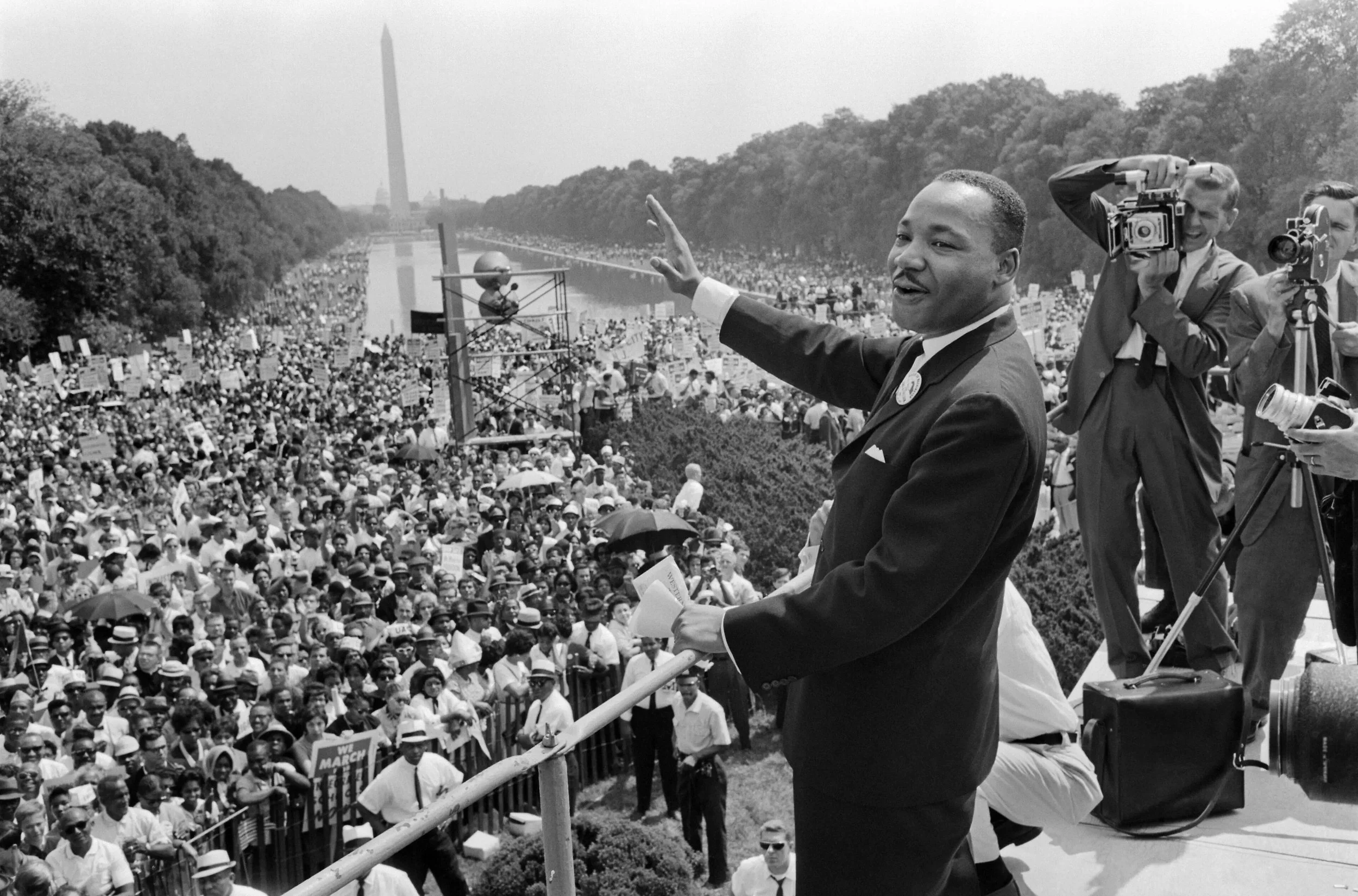
Martin Luther King – I have a Dream – 1963
In this speech, King challenged the nation to live up to the principles of the Declaration, casting it as a promise made to the people, and that the nation has defaulted on that promise:
In a sense we’ve come to our nation’s capital to cash a check. When the architects of our republic wrote the magnificent words of the Constitution and the Declaration of Independence, they were signing a promissory note to which every American was to fall heir. This note was a promise that all men — yes, black men as well as white men — would be guaranteed the unalienable rights of life, liberty, and the pursuit of happiness.
It is obvious today that America has defaulted on this promissory note insofar as her citizens of color are concerned. Instead of honoring this sacred obligation, America has given the Negro people a bad check, a check that has come back marked “insufficient funds.”
. * * *
May those words, which inspired so many these past 250 years, continue to inspire humanity to pursue peace and justice throughout the world.