History of Iran - Part 10
The current situation in the Middle East has focused attention on Iran — a country whose history rivals that of any on earth, stretching back over 5,000 years and encompassing 29 UNESCO World Heritage sites. UNESCO (United Nations Educational, Scientific and Cultural Organization) defines a World Heritage Site as a landmark or area recognized for its outstanding cultural, historical, or natural significance and protected under an international treaty for the benefit of all humanity.
This is part 10 of a multi-part series that will examine that history.
Click here for a list of the articles in this series.
The Peace that Wasn’t
The Sasanian and Byzantine empires had been locked in rivalry for centuries, fighting for control of Mesopotamia, Armenia, and the borderlands between them. After years of fighting in another of the periodic wars between them, Byzantine Emperor Justinian I and Sasanian king Khosrow I signed the Treaty of Dara in 562 CE, also known as the Fifty-Year Peace. One of its thirteen articles required Byzantium to pay Persia an annual subsidy of 30,000 gold coins as a contribution to the costs of defending the Caucasus passes. Both sides agreed to halt construction of new fortifications or the strengthening of existing ones along their shared border. And the Sasanians agreed to grant resident Christians freedom of worship.
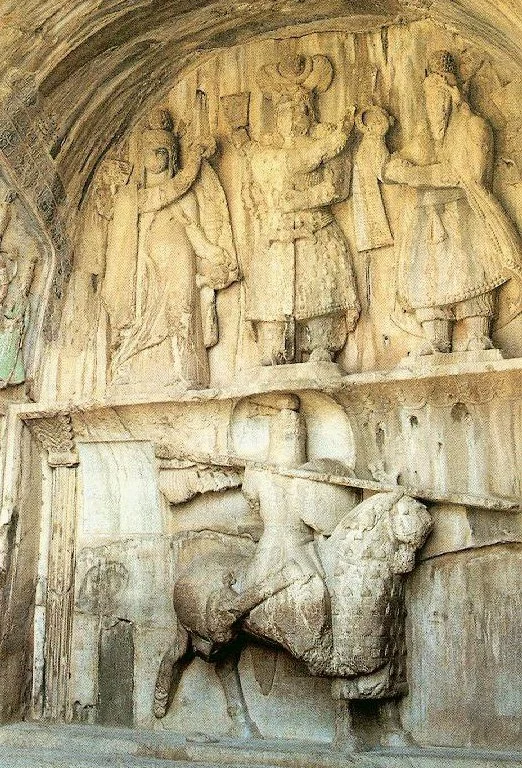
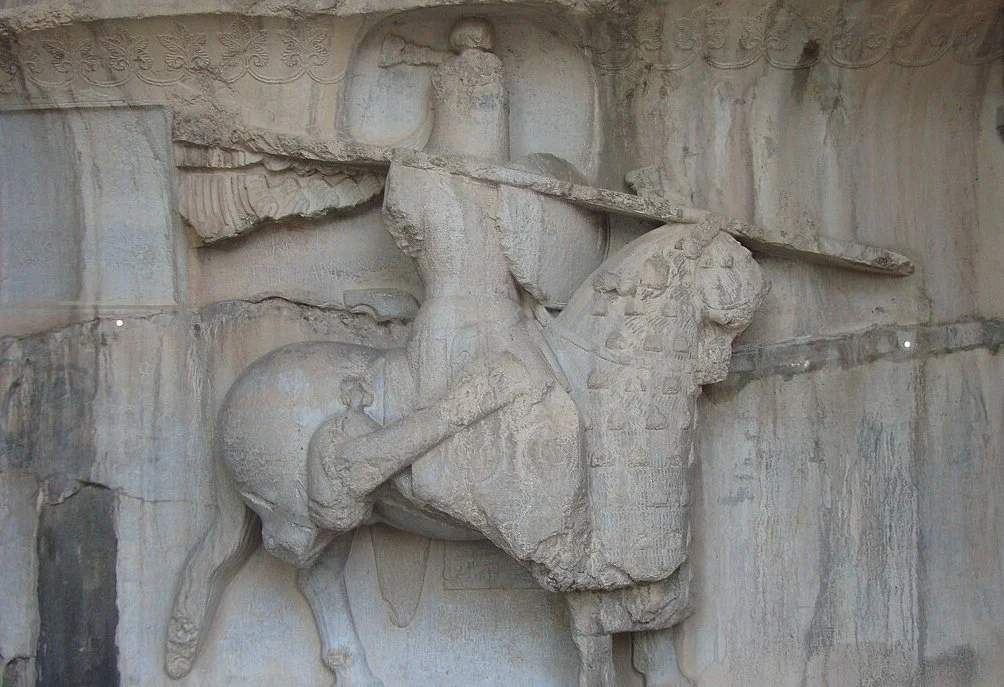
The 50-year treaty lasted only 10 years. Tensions continued between the empires until 572 CE, when the Byzantine Emperor Justinian II ended the annual payments, triggering the Byzantine–Sasanian War of 572–591. As with earlier conflicts between the empires, the fortunes of war waxed and waned between the two forces. Khosrow I, signer of the Treaty of Dara, died during the war, and his son, Hormizd IV, continued the conflict. After some battlefield reverses, Hormizd dismissed General Bahram Chobin in 590 CE. In response, Bahram led a revolt against the king. Even after his court overthrew Hormizd and installed his son, Khosrow II, as king, Bahram continued his rebellion and took the throne for himself. Khosrow was forced to flee and, ironically, he found refuge with the Byzantines, his enemies. Little did he know that this would start the chain of events that led to the end of the Sasanian empire.
Peace at Last?
Khosrow arrived in Byzantine Syria with almost nothing. He was a young king deposed by a military strongman, his father murdered, his army gone. He wrote a letter to the Byzantine Emperor Maurice, which was recorded by the Byzantine historian Theophylact Simocatta. Khosrow said he was the legitimate king, Bahram was a rebel usurper, and it was in their mutual interest to defend orderly succession. He warned Maurice that if "fierce, malevolent tribes" were allowed to take control of Persia, they would in time "gain irresistible might, which will not be without great injury to your tributary nations as well." In other words, help me, or face something worse.
Maurice's Senate unanimously advised against it. Helping the king of Persia, the empire's greatest rival, the enemy of several hundred years of warfare, was a dangerous gamble. Maurice overruled them.
Lands Ceded by Khosrow in 591, click to expand
By Cplakidas - Own work, CC BY-SA 3.0
Khosrow offered significant concessions in return for Byzantine support. He would cede territories and key cities back to the Byzantine Empire. The nearby map shows territorial changes. He would end the annual payments first included in the Treaty of Dara.
Maurice may also have genuinely liked Khosrow. He formally adopted Khosrow through a medieval ritual where weapons are presented to create a father-son bond. The Zoroastrian King of Persia was ritually adopted by the Christian Emperor of Byzantium. Some sources believe Khosrow married Maurice’s daughter to cement the alliance.
Supported by Byzantine troops, Khosrow marched into Persia and defeated Bahram’s army at the Battle of Blarathon in 591. Bahram fled to the Turks and was assassinated at Khosrow’s instigation. Khosrow honored every territorial promise he had made to Maurice, and the two empires entered a period of peace.
It didn’t last.
The Death of an Ally
Maurice faced several challenges. The Byzantine Empire was under constant military threat from the Avars and Slavs, groups to the north. He spent years fighting them after making peace with the Sasanians. He worked to restore the empire’s finances by cutting expenditures and wages, which made him unpopular. In 602 CE, he made a fatal mistake. His army mutinied after Maurice ordered them to remain north of the Danube River for the winter, rather than returning to winter quarters. The troops mutinied and chose an obscure officer named Phocas as their leader. Maurice and his family tried to flee but were captured. Phocas had Maurice's five sons executed one by one before their father's eyes. As each was killed, Maurice found the strength to say “Thou art just, O Lord.” Maurice and his sons’ heads were put on display. The daughters were spared but executed a few years later, allegedly for plotting against the Emperor.
600 AD, before the war
By Getoryk - Own work CC BY-SA 3.0, click to expand
Persian King Khosrow declared war against the Byzantines, in part to avenge Maurice’s death, and also to win back territory he had ceded 10 years back when Maurice helped him reclaim the throne.
Thus started the war that ended an empire.
The Last Great War of Antiquity
Khosrow's forces went on the attack. By 605 CE, the Sasanians had recaptured Dara, the fortress city Maurice had won as part of his deal with Khosrow a decade earlier. By 609 CE, they had swept through Mesopotamia and Armenia. Phocas was an ineffective leader. Byzantine resistance was collapsing across the board.
In 608 CE, the Byzantine Exarch (governor) from Africa, Heraclius the Elder, declared himself and his son, also named Heraclius, as co-consuls, making a claim to the throne. He assembled an army and a navy and conquered Constantinople in 610 CE. When Heraclius captured Phocas, he was said to have asked him, "Is this how you have ruled, wretch?" Phocas's reply, "And will you rule better?" so enraged Heraclius that he beheaded Phocas on the spot.
621 AD, Sasanian conquests, By Keeby101, CC BY-SA 3.0, click to expand
The Avars and Slavs to the north took advantage of Byzantine weakness to attack. They succeeded in taking part, but not all of Greece. With his empire in retreat on multiple fronts, Heraclius sought peace with Khosrow, who rejected the approach and killed the diplomats.
Sasanian armies continued to advance and capture Byzantine territory. By 613 CE, Antioch and Damascus had fallen. In 614, Jerusalem fell, and much of the Christian population was massacred. The Church of the Holy Sepulcher, built on the site where Christ was believed to have been crucified and buried, was burned. The Sasanians carried off the relic Christians venerated above all others: the True Cross, believed to be the physical cross on which Jesus had been crucified. This was a devastating loss for the Byzantine Empire as severe as the sack of Rome back in 410.
Egypt, Byzantium's wealthiest province and its primary source of grain, fell in 619. By 622, Rhodes and several Aegean islands had fallen. In 626, a Sasanian army reached Chalcedon, the city on the eastern shore of the Bosphorus directly across from Constantinople. Avar allies simultaneously besieged the city from the European side. To all appearances, the war, which had been going on for 20 years, was going to end in a Persian victory and the downfall of the Byzantine Empire.
Heraclius Strikes Back
Barberini Ivory, Byzantine Art, showing triumphant emperor trampling enemies, blessed by Christ, click to expand
But the war wasn’t over yet. Constantinople withstood the assault. Heraclius rebuilt and reorganized the army. He melted church treasures to fund the military and negotiated a truce with the Avars to free up his forces. Then he made a large gamble by landing his armies in Armenia to attack the Persian heartland directly. He is sometimes called the first Crusader because he framed the conflict as a Holy War to recover the True Cross and take back Jerusalem.
Heraclius’s forces won engagement after engagement over the next six years. The decisive blow was delivered in the Battle of Nineveh in 627. In a shocking reversal, it was the Persian Empire that was near defeat. According to ancient sources cited by University of Chicago historian Walter Emil Kaegi, Heraclius sent a note to Khosrow: “I pursue and run after peace. I do not willingly burn Persia, but compelled by you. Let us now throw down our arms and embrace peace. Let us quench the fire before it burns up everything.”
Reliquary of the True Cross, flanking the cross are Constantine the Great and his mother Helena, who is credited with discovering the True Cross in the 4th century, click to expand
Shortly thereafter, in 628, Khosrow’s son, Kavad II, staged a coup, killing his father and his brothers. He then made peace with Heraclius. The terms: return all conquered territory, including Egypt and Jerusalem, to the Byzantines. Also, free captured soldiers, pay a war indemnity, and return the True Cross. In both a religious and political triumph, Heraclius himself carried the Holy Cross back to Jerusalem in 630.
The Aftermath
The Empire was exhausted and financially destitute after 26 years of war. Farms and infrastructure had been destroyed. The population, civilian and military, was greatly reduced. The Empire became engulfed in a Civil War between competing factions, including different noble families and the military. Over the next four years, 13 different kings (and one Queen) ruled.
Kavad died a few months after taking the throne, succumbing to a plague that devastated Persia. His 7-year-old son became king, with a Regent ruling the country. Two years later, one of Khosrow’s generals usurped the throne, killing the now 9-year-old child. He lasted all of 40 days until he was murdered. Khosrow’s daughter, Boran, became one of the few women to rule Iran in its long history. She was gone within two years, either by natural causes or violence, and the pattern continued for several years of short reigns ending in a violent death.
Finally, in 632 CE, Yazdegerd III, grandson of Khosrow, ascended the throne. Scholars differ on his age, either 8 or 15 years old. Either way, he was young. He had no power. The Empire started to disintegrate as local governors asserted independence. The weakened Empire was under attack from tribes to the east and west. What was left of the army was unable to resist. At least Yazdegerd did not have to worry about the Byzantines. They had also been devastated by the long war and were no longer a threat. Instead, a new threat was arising from the south and east. In 636, early in Yazdegerd’s reign, the Persians were defeated by the Islamic caliphate, a new force, at the Battle of al-Qadisiyyah in modern-day Iraq. That story will be told in the next part of this series.