History of Iran - Part 13
The current situation in the Middle East has focused attention on Iran — a country whose history rivals that of any on Earth, stretching back over 5,000 years and encompassing 29 UNESCO World Heritage sites. UNESCO (United Nations Educational, Scientific and Cultural Organization) defines a World Heritage Site as a landmark or area recognized for its outstanding cultural, historical, or natural significance and protected under an international treaty for the benefit of all humanity.
This is part 13 of a multi-part series examining that history.
Click here for a list of the articles in this series.
The Sunni-Shia Split
After Muhammad's death in 632, the Muslim community faced a leadership question: who should lead them now? Should the leader be selected by consensus (Sunni) or by bloodline (Shia)? Abu Bakr was chosen by consensus among Muhammad's companions as the first caliph, followed by Umar, Uthman, and Ali. These four were collectively known as the Rashidun Caliphate, which translates to ‘Rightly Guided Caliphs.’ All four were related to Muhammad. Abu Bakr and Umar were his fathers-in-law (he had multiple wives). Uthman and Ali were his sons-in-law, as they married Muhammad’s daughters.
Abu Bakr was the only caliph to die a natural death. Umar, who conquered most of Iran, was assassinated by a Persian slave named Abu Lu'lu'a in 644. A committee appointed by Umar picked Uthman to succeed him. Uthman completed the conquest of Iran and seized North Africa from the Byzantines.
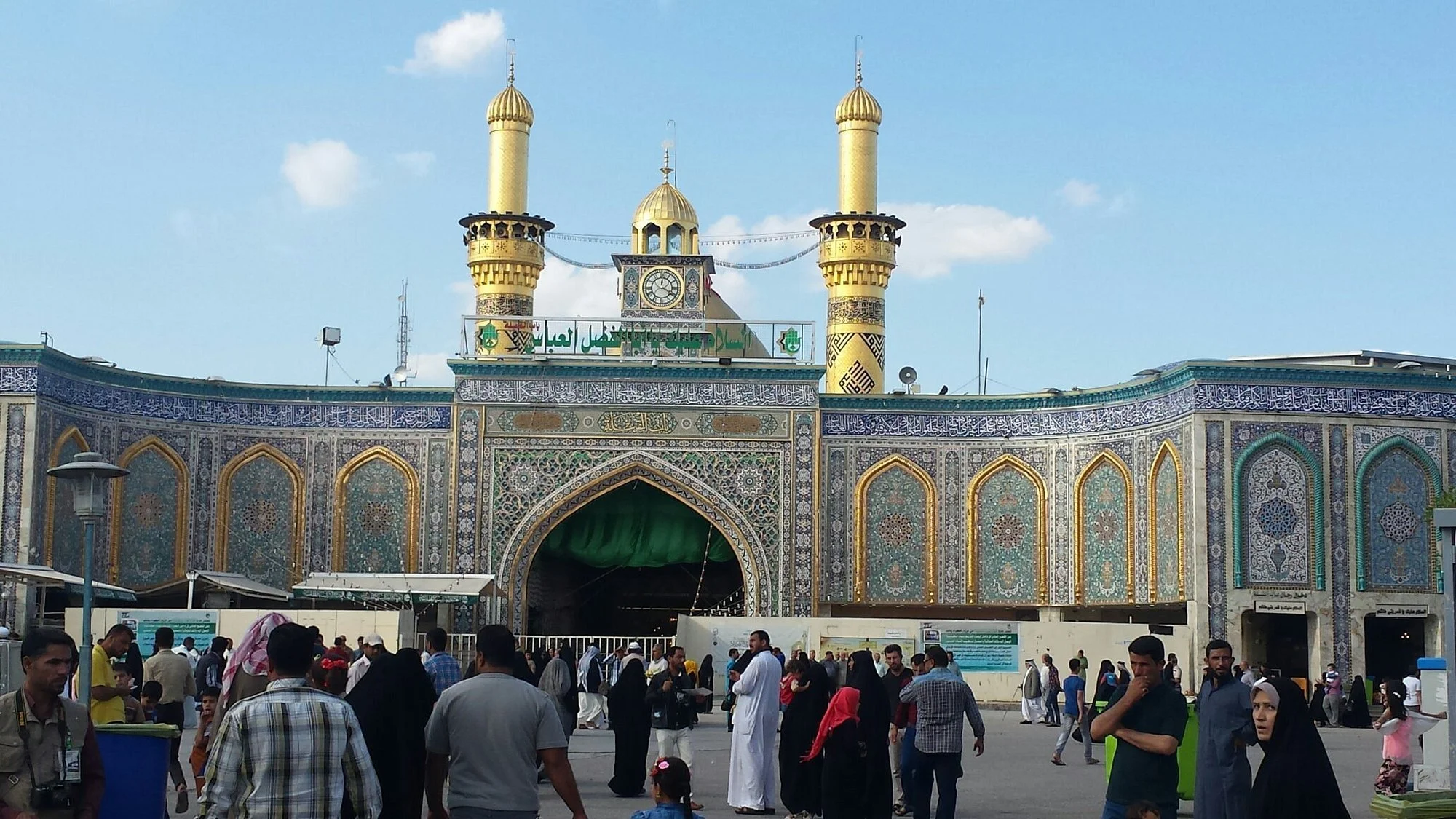
The Imam Hussein Shrine in Karbala, Iraq, marks the site where Hussein ibn Ali — Muhammad's grandson — was killed in 680. It’s one of the holiest sites in Shia Islam.
Opposition arose to Uthman. He was accused of nepotism. There were disputes over the distribution of lands and revenue from the conquered territories. In 656, a delegation from Egypt arrived to air their grievances. Talks broke down, and a letter surfaced, allegedly from Uthman, ordering the killing of the delegation. Uthman denied writing the letter. Nonetheless, his house was besieged, and he was killed. His opponents resisted burying him in a Muslim cemetery. He was buried in a Jewish cemetery, which years later was merged into an adjacent Muslim one.
Ali was elected caliph in 656, but was immediately met with opposition by Uthman’s supporters. A civil war broke out between the factions. The opposition was led by Muʿāwiyah, who was a cousin of Uthman and one of Muhammad’s brothers-in-law. The rebellion succeeded, and Ali was assassinated in 661. Muʿāwiyah, a member of the Umayyad clan, became caliph, the first of the Umayyad Caliphate.
Muʿāwiyah’s death in 680 created another succession crisis. He had nominated his son, Yazid, as the next caliph. Husayn ibn Ali, son of Ali, the fourth caliph, and grandson of Muhammad, challenged Yazid’s legitimacy. Husayn and a small band of followers were met and killed at the Battle of Karbala, located in Iraq. Shia Muslims consider this a defining event in their tradition. Husayn's death is commemorated annually on Ashura, the tenth day of Muharram, the first month of the Islamic calendar. Shia is short for Shi’atu Ali, meaning the party of Ali, the fourth caliph. Shias do not believe in the legitimacy of the other caliphs. Sunni derives from Sunnah, generally meaning tradition. Sunnis accept Abu Bakr as the first caliph, selected through consensus. The original split was over who had the right to lead, but over time, theological differences arose between the two groups. Today, over 85% of Muslims are Sunni. Iran itself was overwhelmingly Sunni for centuries. Its shift to Shia Islam occurred much later, which this series will cover in a future essay.
Umayyad Dynasty and Iran
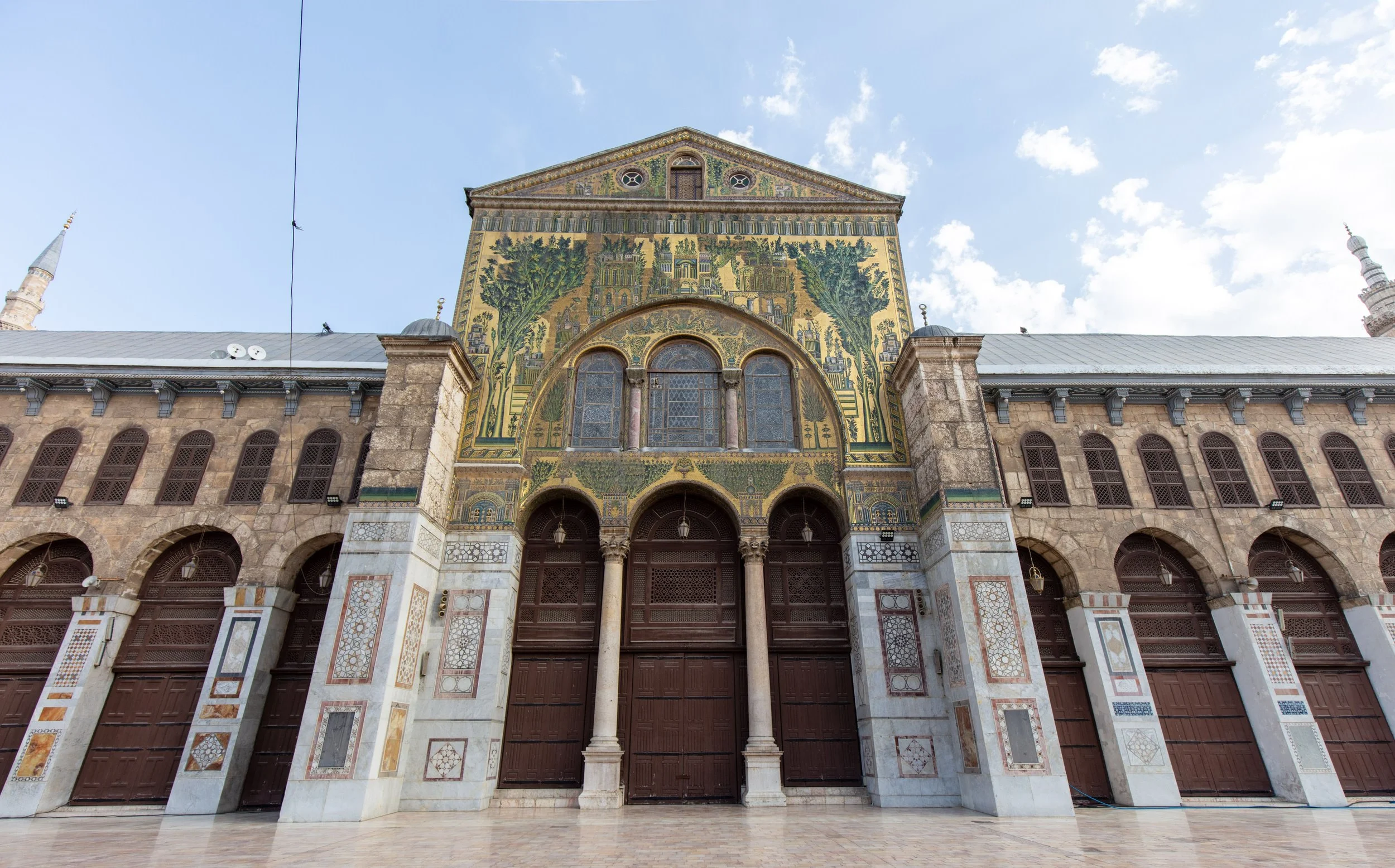
The central mosaic at the Umayyad mosque in Damascus (Zirrar/MEE)
The Umayyad dynasty ruled for almost 90 years, from 661 to 750 CE. The Umayyad Caliphate imposed Arabic as the primary language throughout the Islamic empire, including Iran. Zoroastrians were treated as ‘Dhimmis,’ which means ‘protected person.’ This term applied to non-Muslims living in an Islamic State. They were allowed to continue practicing their religion but were forced to pay a tax known as the ‘jizya.’ They were considered second-class citizens. Dhimmi status also applied to other religions including Jews and Christians.
As Persians converted to Islam, they were treated as ‘mawālī,’ a term meaning ‘clients,’ referring to non-Arabs who had converted to Islam. During this time period, they were still second-class citizens, in some cases still required to pay the jizya. They were generally excluded from positions of power.
Non-Arab Muslims outnumbered Arab Muslims and began to resent their status. They believed Quran 49:13 emphasized equality among different peoples and that worth is measured by righteousness, not origin. The Quran verse:
“O mankind! Lo! We have created you male and female, and have made you nations and tribes that ye may know one another. Lo! the noblest of you, in the sight of Allah, is the best in conduct. Lo! Allah is Knower, Aware.”
— Quran 49:13, trans. M. M. Pickthall, The Meaning of the Glorious Quran (1930)
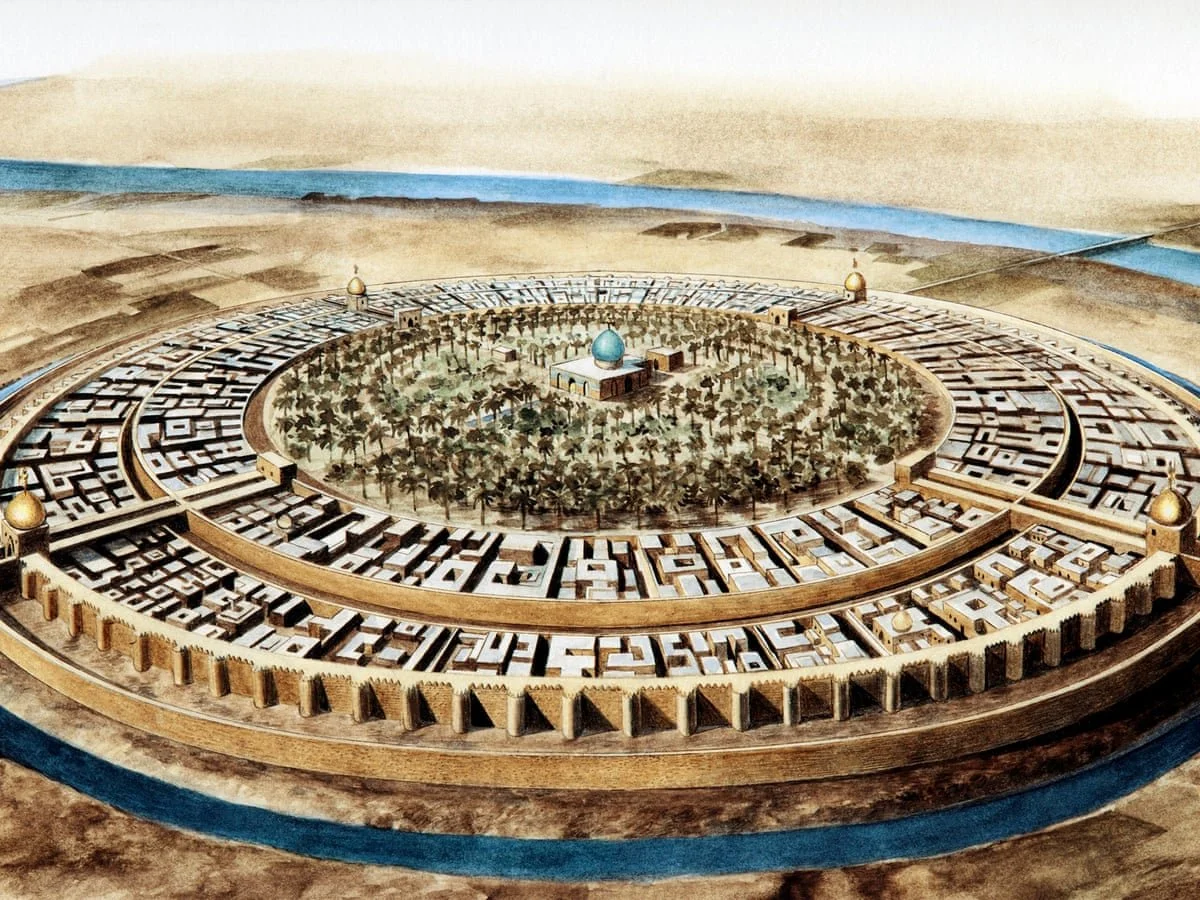
The round city of Baghdad. Illustration: Jean Soutif/Science Photo Library
The Abbasid family, descended from Muhammad's uncle al-Abbas, used these grievances plus Shia sympathy to organize the Hashimiyya movement. This movement crystallized into armed rebellion in the year 747. A Persian named Abu Muslim led the rebellion. He defeated the Umayyad forces in 750. Abu al-Abbas al-Saffah, a member of the Abbasid family, became caliph, establishing the Abbasid dynasty.
Abbasid Dynasty and Iran
The Abbasid caliphate was the third Islamic caliphate and was led by the Abbasid family. In 762, they founded the city of Baghdad (Persian for God-given) as its capital. The city was built on the Tigris River just a short distance from the ruins of Ctesiphon, the former Sasanian capital. Baghdad was to become a center of learning and a significant part of the Islamic Golden age, the subject of a future essay.
The Persian Barmakid family was very influential in the early Abbasid dynasty with Jafar al-Barmaki serving as vizier (senior minister) to the caliph. He also appeared in several Arabian Nights tales in various roles. The 1992 Disney film Aladdin features an evil vizier and sorcerer called Jafar.
The Abbasid dynasty slowly lost power leading to a period known as the Iranian Intermezzo, a period of Iranian political and cultural resurgence, the rise of Iranian Muslim rule, and a revival of Persian literature and language. We will cover these topics in a future essay.