History of Iran - Part 12
The current situation in the Middle East has focused attention on Iran — a country whose history rivals that of any on earth, stretching back over 5,000 years and encompassing 29 UNESCO World Heritage sites. UNESCO (United Nations Educational, Scientific and Cultural Organization) defines a World Heritage Site as a landmark or area recognized for its outstanding cultural, historical, or natural significance and protected under an international treaty for the benefit of all humanity.
This is part 12 of a multi-part series examining that history.
Click here for a list of the articles in this series.
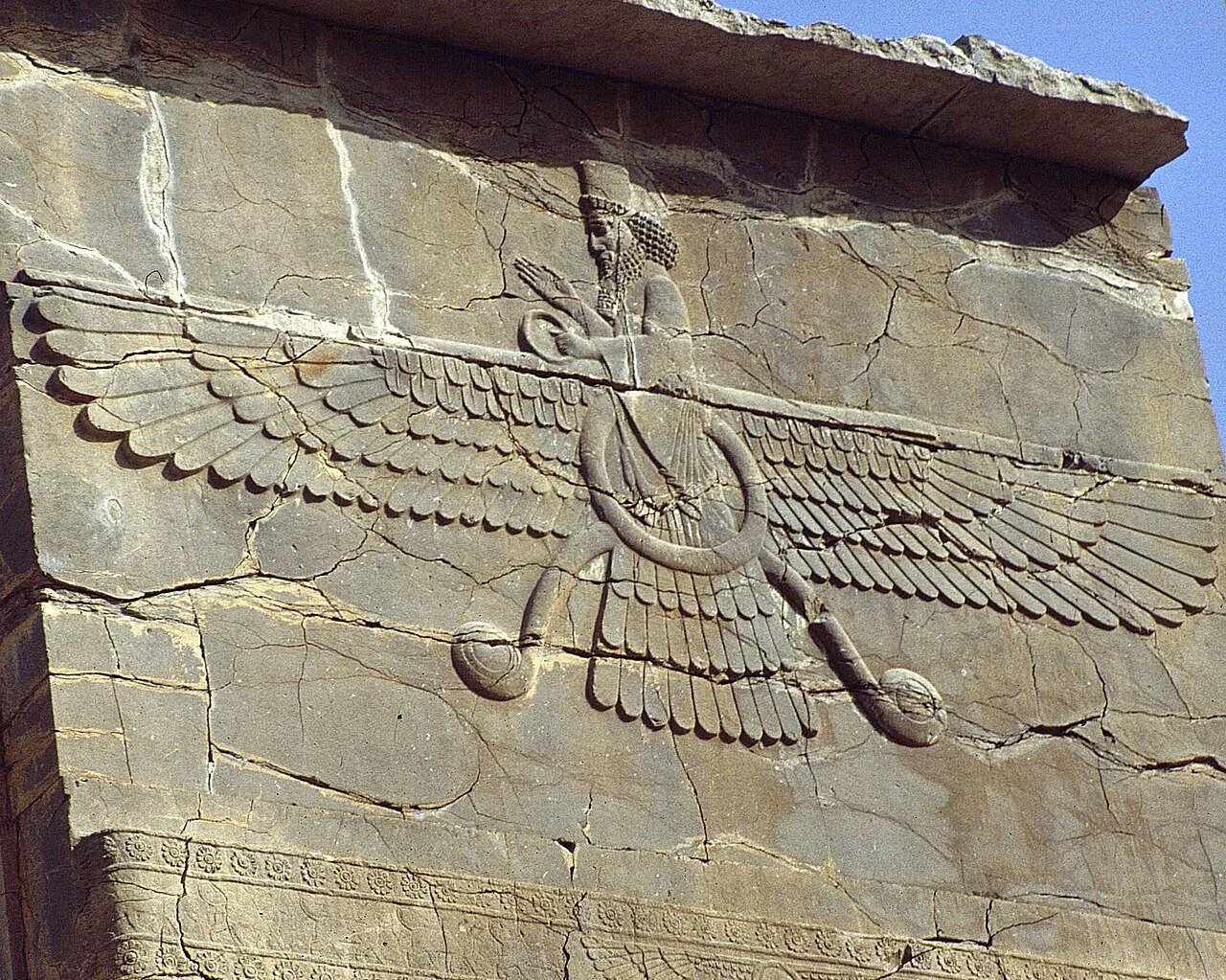
Ahura Mazda relief
By Ziegler175 - Own work, CC BY-SA 3.0
Zoroastrianism
Zoroastrianism is an ancient Iranian religion. It is a monotheistic religion originating with the prophet Zoroaster. According to tradition, Zoroaster grew up in a polytheistic society and, around age 30, experienced a vision that there was one supreme God, Ahura Mazda (‘Wise Lord’). Scholars believe he lived before 1200 BCE, although tradition places him closer to the Achaemenid Empire under Cyrus the Great, about 550 BCE.
Zoroastrian scripture is collected in the Avesta. One central verse: “Now the two primal Spirits, who reveal themselves in vision as Twins, are the Better and the Bad, in thought and word and action. And between these two the wise ones chose aright, the foolish not so.”* This reflects the belief of the ongoing conflict between Ahura Mazda (spiritual light/truth) and Angra Mainyu (destructive spirit/falsehood), and that humans must choose their path. “Good thoughts, good words, good deeds” is the central ethical motto of Zoroastrianism, guiding individuals to cultivate moral integrity and contribute positively to the world. Zoroastrianism teaches that individuals undergo a post-death judgment, where the soul is assessed based on moral behavior. The righteous enjoy a blissful existence, while the wicked face punishment.
Worship includes prayers, fire rituals, and offerings at fire temples, as fire symbolizes divine light and purity. Zoroastrians believe in a linear concept of time, where history progresses toward the ultimate defeat of evil and the renewal of the world (Frashokereti). At this final renovation, the dead will be resurrected, and the world will be purified and perfected. Every individual is held accountable for moral choices, which contributes to the outcome of the cosmic struggle. This places emphasis on free will, ethical living, and self-improvement.
The Avesta is in the Avestan language. Similar to Latin, that language is no longer spoken. For hundreds of years, it was passed down orally until the Sasanians compiled it in writing. After the Islamic conquest, large portions of the written text were lost.
Zoroastrianism's most famous festival is Nowruz, the Persian New Year, celebrated at the spring equinox. Rooted in Zoroastrianism, celebrating renewal, Nowruz proved so culturally durable that it remains Iran's largest holiday today, celebrated widely regardless of religion — a case of a Zoroastrian tradition outliving the empires that once enforced it.
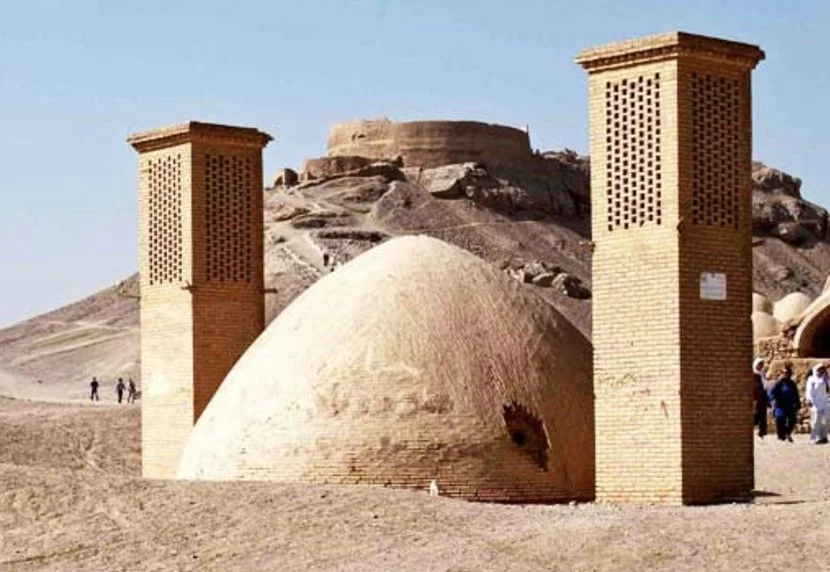
Tower of silence for burial
Beyond Nowruz, Zoroastrians traditionally observe six seasonal festivals called the Gahambars, tied to agricultural milestones and stages of creation, along with Sadeh, a midwinter festival celebrating the mythical discovery of fire, and Mehregan, an autumn festival honoring Mithra, a divine being associated with covenant and light. Together, these festivals wove religious devotion into the seasonal rhythms of ancient Iranian life.
In traditional Zoroastrian practice, bodies weren't buried or cremated, since both earth and fire were considered too sacred to be polluted by a corpse. Instead, the dead were exposed on raised, open-air towers to be consumed by sun and scavenging birds. The practice was banned in Iran in the 1970s for public health reasons, but the towers still stand across the country, including this well-preserved example near Yazd
Zoroastrianism and Modern Religions
Many Western religious ideas appeared in Zoroastrianism: a supreme god locked in struggle against an evil power; an organized hierarchy of angels and demons; heaven and hell as afterlife destinations; a final judgment at the end of history; and a coming savior figure who sets the world right.
Two centuries of Persian rule over the Jewish homeland, beginning with Cyrus the Great's conquest of Babylon, provided an opportunity for cross-fertilization through which these ideas spread, eventually entering Christian and Islamic thought. One connection is direct: the Magi who visit the infant Jesus in the Gospel of Matthew are, literally, Zoroastrian priests, drawn by their star-reading traditions.
Scholars debate how much of this was coincidental parallel development or actual cultural transmission
Zoroastrianism Under Islamic Rule
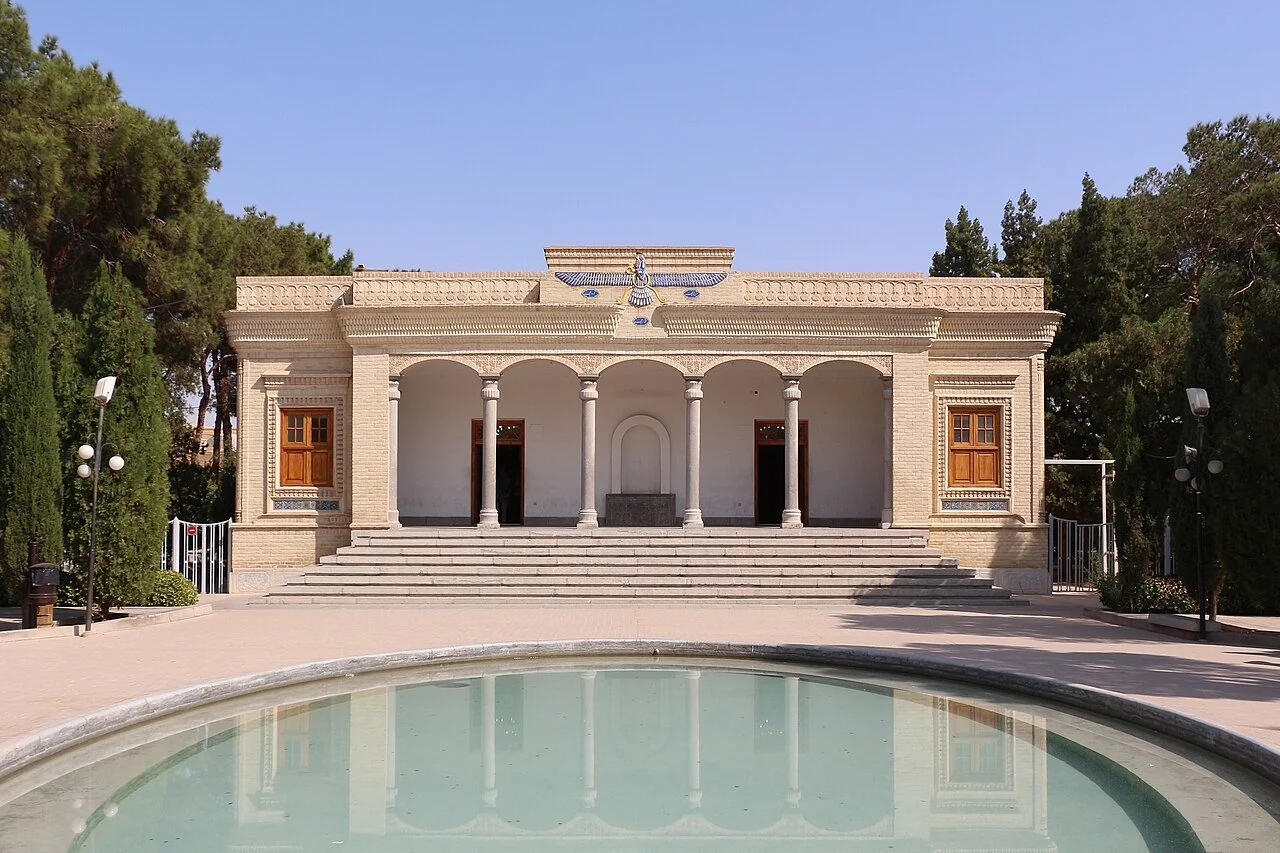
Yazd Atash Behram - fire temple is city of Yazd
By Bernard Gagnon - Own work, CC BY-SA 4.0
Under Islamic rule, Zoroastrians were generally treated as a "protected" religious minority, or dhimmi, a status also extended to Jews and Christians. This allowed them to continue practicing their faith, but required payment of a special tax, the jizya, not imposed on Muslims, and treatment could vary considerably depending on the ruler and era.
Iran's conversion to Islam was a gradual process, unfolding over roughly three to four centuries. Zoroastrian communities survived longest in more remote regions, and Yazd and Kerman remain Iran's traditional centers of the faith to this day for exactly that reason. Between the 8th and 10th centuries, waves of Zoroastrians chose exile over conversion, fleeing to India. Their descendants became known as the Parsis.
There are fewer than 150,000 Zoroastrians today, mostly in India and today’s Iran, with smaller communities elsewhere.
Notably, Freddie Mercury, lead singer for the rock band Queen, was of Parsi descent. Mercury, born Farrokh Bulsara, was raised in a Zoroastrian family. His London funeral was performed by a Zoroastrian priest.
The founder of a small Japanese car company, Jujiro Matsuda, wanted a unique name. He chose “Mazda” from the Zoroastrian God Ahura Mazda, wanting a name that reflected its values of honesty and truth. It’s also a near match for the founder’s name.
At its height, Zoroastrianism was the state religion of the Persian Empire representing millions of people. Today it is a small endangered minority.
*(Yasna 30:3, trans. C. Bartholomae, in Irach J. S. Taraporewala, The Divine Songs of Zarathushtra, 1951)
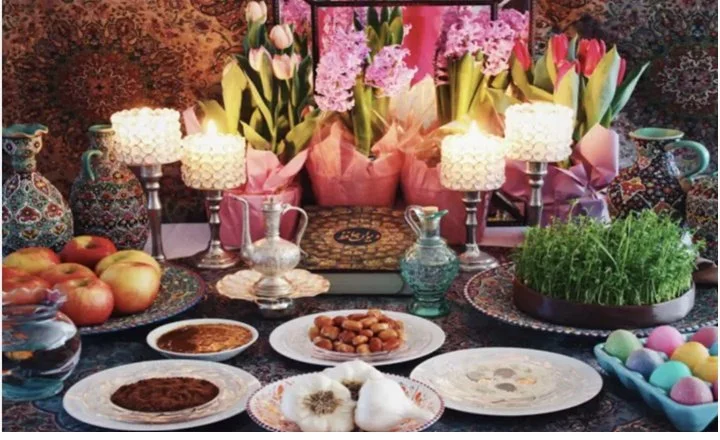
The Haft‑Sin table is a traditional Nowruz display featuring seven symbolic items each representing aspects of life, renewal, and prosperity: apples (seeb), sprouted wheatgrass (sabzeh), garlic (sir), coins, candles, painted eggs, and a mirror-like arrangement, plus hyacinths (sonbol)