History of Iran - Part 2
The current situation in the Middle East has focused attention on Iran — a country whose history rivals that of any on earth, stretching back over 5,000 years and encompassing 29 UNESCO World Heritage sites.
This is part 2 of a multi-part series that will examine that history.
Click here for a list of the articles in this series.
Cyrus the Great
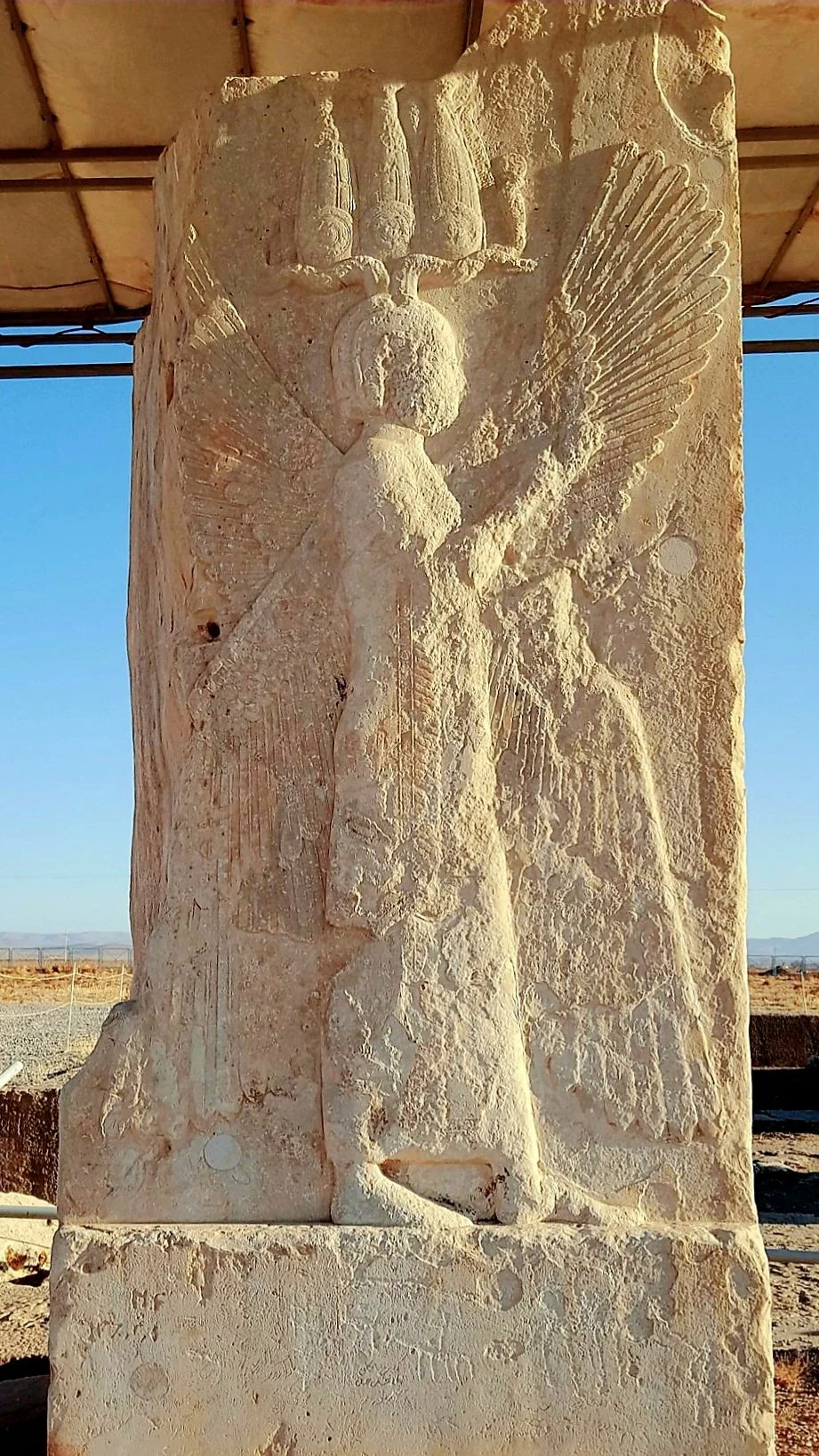
ANCIENT RENDERING OF CYRUS THE GREAT
Surenae, CC BY-SA 4.0 <https://creativecommons.org/licenses/by-sa/4.0>, via Wikimedia Commons
Cyrus the Great ruled from 559 to 530 BC. He belonged to the Achaemenid dynasty, named after an ancestor. He was the king of a small Persian kingdom that was a vassal state to the Medes. After leading a successful rebellion against the Medes around 550 BC, he defeated the Lydians in western Asia Minor, ruled by King Croesus, known as the richest man in the world. He then conquered Babylon in 539 BC, which was the most powerful empire at the time. Cyrus diverted the Euphrates River, and his troops walked in through the riverbed, defeating Babylonia without a fight. These conquests made Cyrus the ruler of the largest empire the world had yet seen.
The conquest of Babylon is described in the Old Testament Book of Daniel:
“Belshazzar the king made a great feast to a thousand of his lords, and drank wine…[using] golden and silver vessels which his father Nebuchadnezzar had taken out of the [Jerusalem] temple…”
“In the same hour came forth fingers of a man's hand, and wrote…upon the plaister of the wall of the king's palace…Then came in all the king's wise men: but they could not read the writing, nor make known to the king the interpretation thereof.”
The king brings in Daniel, who reads the four words that were written:
“And this is the writing that was written, MENE, MENE, TEKEL, UPHARSIN.” Daniel explains the four words: “God has numbered Belshazzar's days, he has been weighed and found wanting, and his kingdom will be given to the Medes and the Persians.”
Belshazzar was slain that night.
Two common English phrases come from this story – “The Writing on the Wall” and “Weighed in the balance and found wanting.”
Two of the most detailed accounts of Cyrus’s reign were written by Greeks, Persia's bitter enemy. That both writers portrayed him with admiration speaks to the impression he left on the ancient world.
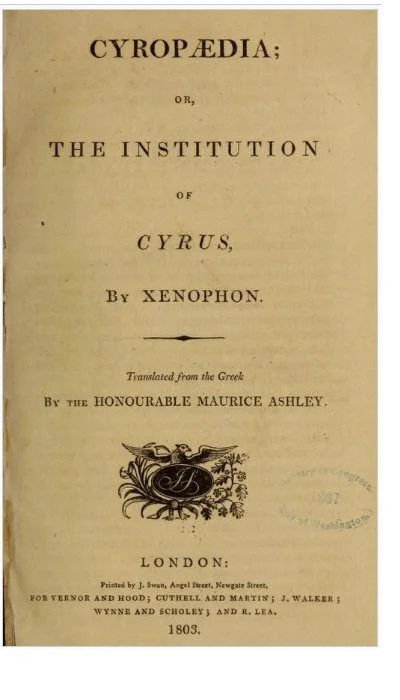
Xenophon’s Book on Cyrus
Herodotus, writing around 440 BC, described Cyrus as "a father, for he was gentle and contrived for them all things good." It is a remarkable tribute from a Greek to a Persian king.
Xenophon, writing around 370 BC, devoted an entire book about him as the model ruler. The work is part biography, part leadership manual, and though it blends history with fiction, it reflects a genuine historical reputation. Xenophon's Cyrus leads by example rather than fear: “Most of all I vowed that my followers would learn more from my own example than from any legal code or set of regulations.” He rejects the luxury and ease of other kings: "I hold that the true leader shuns luxury and ease. Once in power, he should want to work harder than ever." And he chose his officers without regard to origin: "We should choose the best men to join us in the work of command, regardless of their country or color."
Herodotus also describes Cyrus's humanity. After defeating Croesus, Cyrus ordered him burned alive on a great pyre, but relented and spared him. Legend has it that the Gods brought down a rainstorm to extinguish the flames. Croesus became Cyrus’s trusted advisor.
Thomas Jefferson’s copy of The Education of Cyrus is preserved today in the Library of Congress. Scholars believe it influenced his thinking on leadership and religious freedom, ideas that found their way into the founding documents of the United States.
Cyrus and the Jewish People
When Cyrus conquered Babylon in 539 BC, among those living there were Jews, exiled by the Babylonians decades earlier after the destruction of the First Temple in Jerusalem. Cyrus issued a decree allowing them to return home and rebuild their Temple. The decree is recorded in the Old Testament Book of Ezra (1:2-3):
"Thus saith Cyrus king of Persia, the LORD, God of heaven… hath charged me to build him a house at Jerusalem…Who is there among you of all his people? his God be with him, and let him go up to Jerusalem."
In plain terms, the Jews are free to return home and rebuild the temple.
Isaiah, written over a century earlier, had prophesied these events, naming Cyrus by name, to fulfill God’s will (Isaiah 44:28).
"That saith of Cyrus, He is my shepherd, and shall perform all my pleasure: even saying to Jerusalem, Thou shalt be built; and to the temple, Thy foundation shall be laid."
This ancient story was recalled by an American President over 2,500 years later. Under President Truman, the United States recognized Israel’s independence in 1948, the first nation to do so. In November 1953, former President Harry Truman was introduced at the Jewish Theological Seminary in New York as "the man who helped create the State of Israel." Truman shot back: "What do you mean, helped create? I am Cyrus. I am Cyrus." Truman saw himself as fulfilling the same role as Cyrus, allowing a displaced Jewish people to return to their homeland.
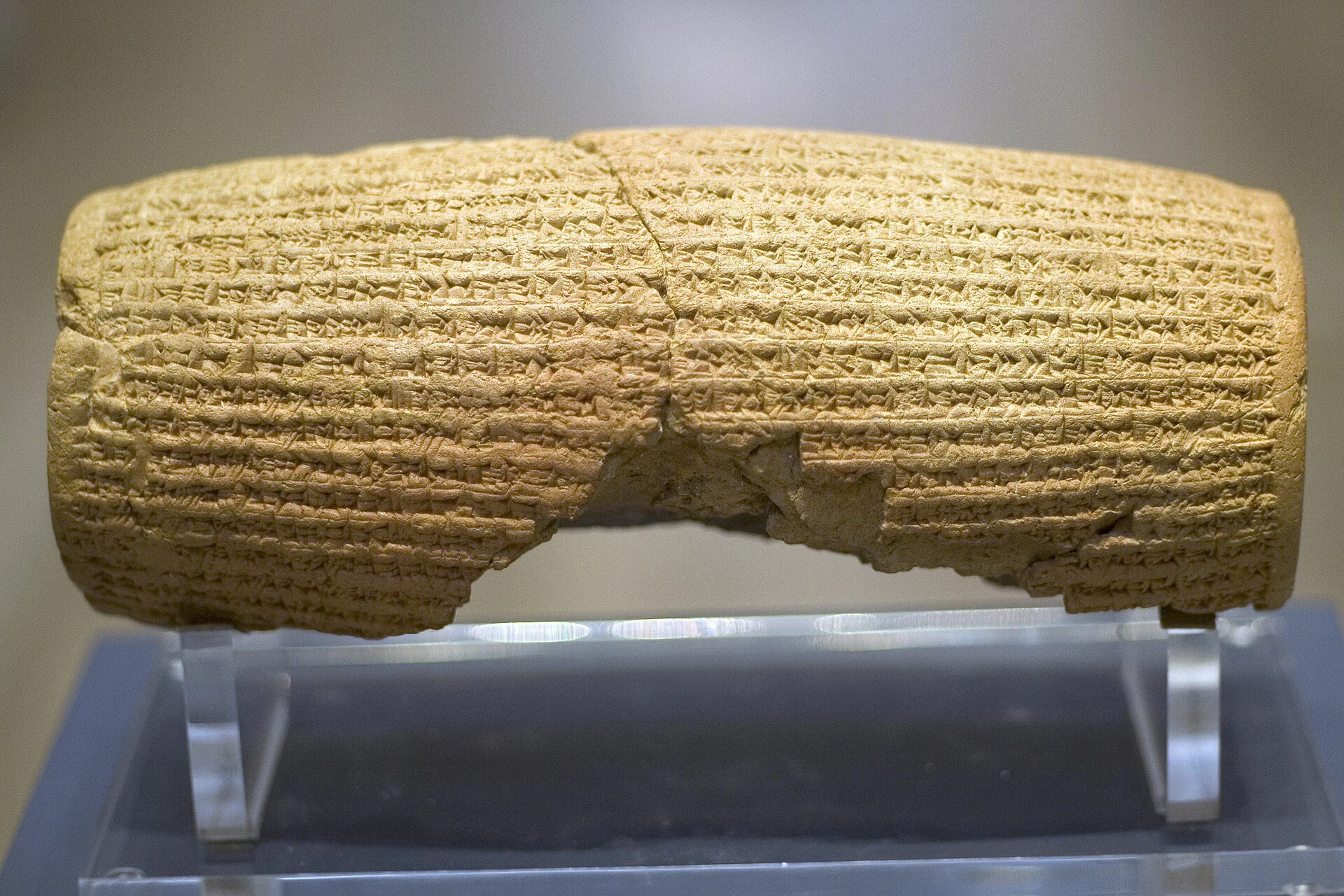
CYRUS CYLINDER
Prioryman, CC BY-SA 3.0 <https://creativecommons.org/licenses/by-sa/3.0>, via Wikimedia Commons
The Cyrus Cylinder
The Cyrus Cylinder is a small clay barrel inscribed in Babylonian cuneiform. Discovered in Babylon in 1879, it is now housed in the British Museum in London.
The Cylinder was written shortly after Cyrus conquered Babylon in 539 BC. It condemns the previous king, Nabonidus, as an incompetent ruler who imposed forced labor on his people and interfered with religious worship. Cyrus presents himself not as a foreign conqueror but as a liberator chosen by the Babylonian god Marduk.
The Cylinder then describes Cyrus's policies. He freed the citizens of Babylon from forced labor, relieving what the Cylinder calls their "weariness." He declared that the statues of gods be returned to their original homes, and that all peoples, not just the Jews, who had been displaced would be allowed to return to their own lands.
Two entirely independent documents, the Cylinder and the Bible, written in different languages for different audiences, tell the same story of a Persian king who allowed captive peoples, including the Jews, to return home.
The Shah and the Cylinder
In 1971, Mohammad Reza Shah, the ruler of Iran, organized a celebration to commemorate what he declared to be 2,500 years of continuous Persian monarchy, traced back to Cyrus the Great. It was held at Persepolis, the ancient ceremonial capital of the Achaemenid Persian empire and a UNESCO World Heritage site. Standing before the tomb of Cyrus at Pasargadae, another UNESCO World Heritage site, the Shah declared: "O Cyrus, great King, King of Kings, Achaemenian King, King of the land of Iran. I, the Shahanshah of Iran, offer thee salutations from myself and from my nation. Rest in peace, for we are awake, and we will always stay awake."
For the occasion, the British Museum loaned the Cyrus Cylinder to Iran. The Shah described it as the world's first declaration of human rights. Iran presented a replica to the United Nations, which has displayed it since then.
The Death of Cyrus
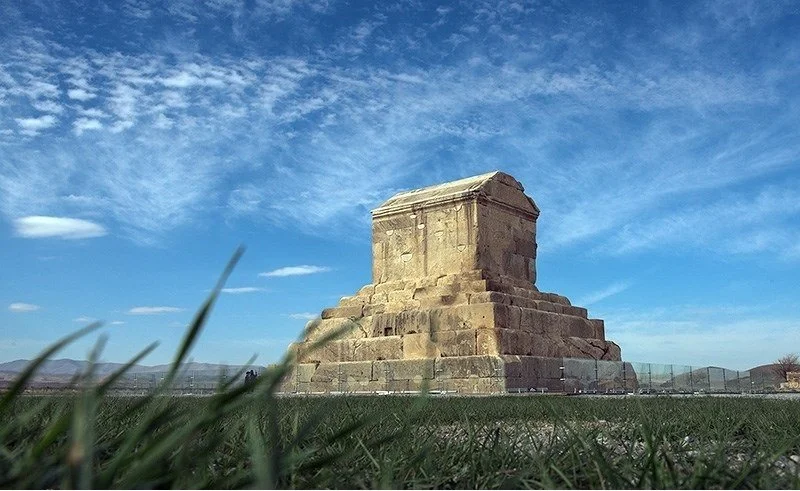
TOMB OF CYRUS
Tasnim News Agency, CC BY 4.0 <https://creativecommons.org/licenses/by/4.0>, via Wikimedia Commons
One measure of the importance of Cyrus the Great in the ancient world was the number of historians who described his death. Most say he died in battle in 530 BC against nomadic peoples living on the border of the Persian empire. In one version, he tried to get the opposing army drunk on wine, but was defeated in the subsequent battle. However, Xenophon says he died peacefully.
He was succeeded by his son, Cambyses. We will continue the story of the Persian Empire in the next installment of this series.