History of Iran - Part 1
The current situation in the Middle East has focused attention on Iran — a country whose history rivals that of any on earth, stretching back over 5,000 years and encompassing 29 UNESCO World Heritage sites. UNESCO (United Nations Educational, Scientific and Cultural Organization) defines a World Heritage Site as a landmark or area recognized for its outstanding cultural, historical, or natural significance and protected under an international treaty for the benefit of all humanity.
This is part 1 of a multi-part series that will examine that history.
Click here for a list of the articles in this series.
Elamites
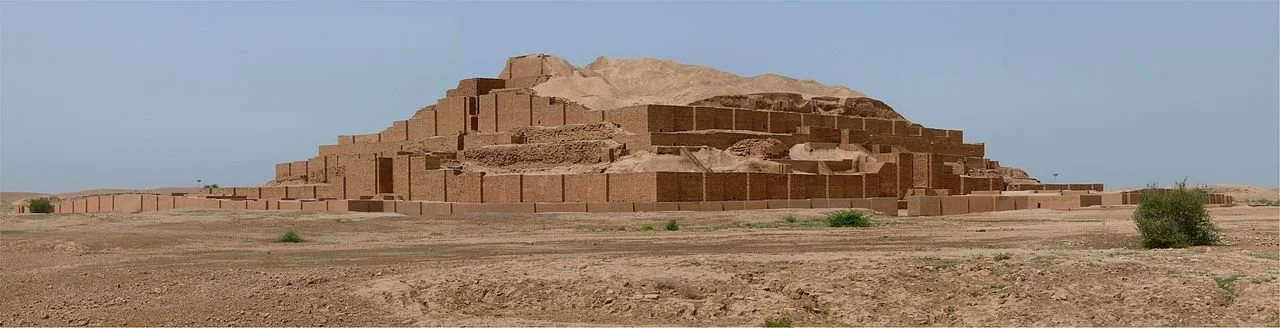
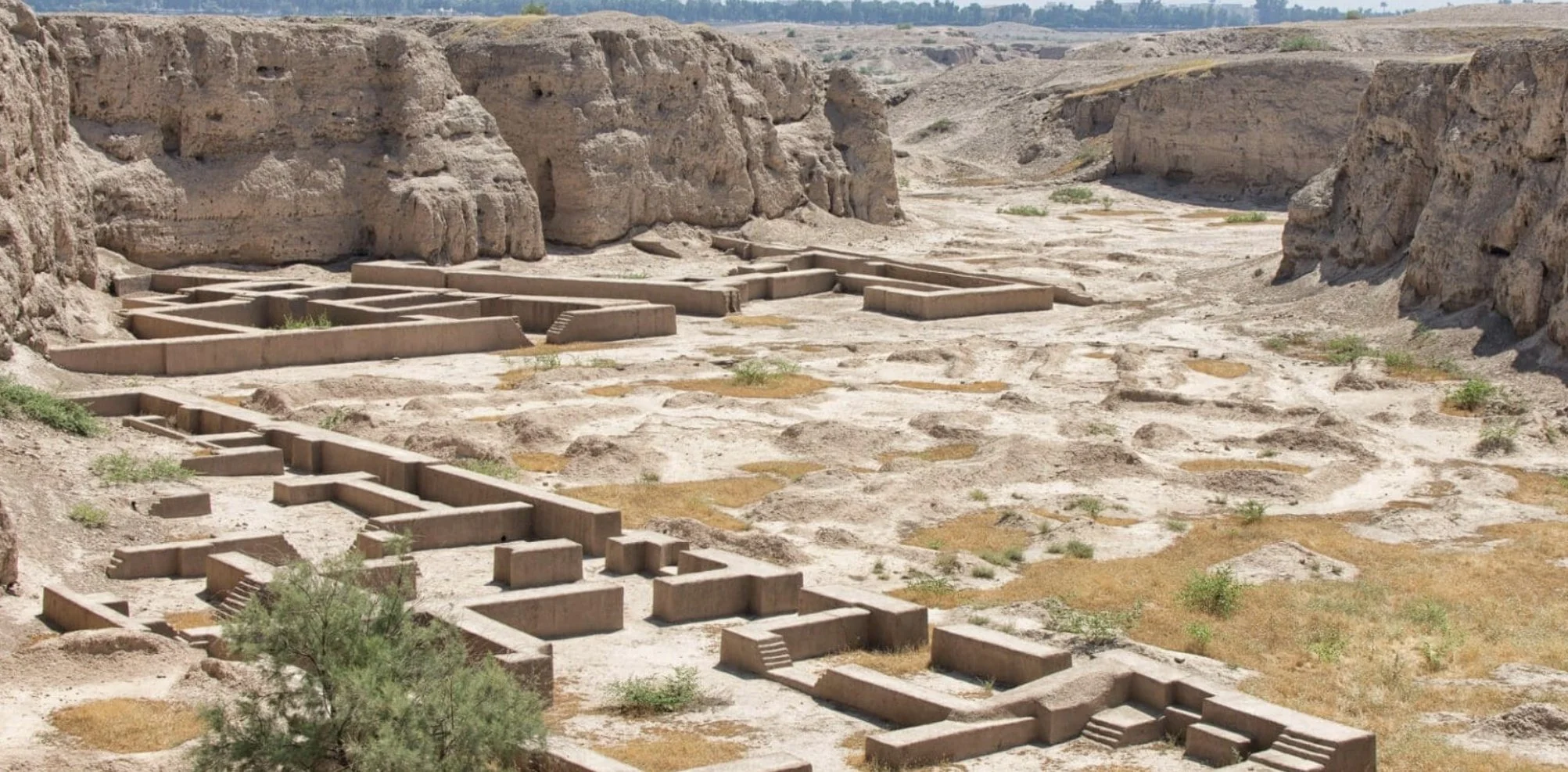
The Elamites were the first recognized group to live in Iran. The Elamite period lasted almost 2,500 years, from before 3,000 BC to around 539 BC. Their capital, Susa, was located in western Iran, near the modern-day border with Iraq. The city's ruins are a UNESCO World Heritage Site. Civilizations of that era built Ziggurats, temples reaching into the sky, to worship their Gods. The Elamites built the Chogha Zanbil, a ziggurat to worship their Gods. It was built around 1,250 BC and is well preserved today. It also is a World Heritage Site.
Around 1,150 BC, they seized the original stone stele of the Code of Hammurabi* from Babylon as war booty and brought it to Susa. It was discovered in 1901 and is now on display at the Louvre.
Elam was an important power in the ancient world and appears throughout the Old Testament, documenting both its power and decline. Genesis 10 includes the Elamites in the ‘Table of Nations,’ representing the nations descended from Noah’s sons. Genesis 14 describes the King of Elam leading a coalition that defeats rebellious kings in Canaan (‘the War of the Kings’).
Babylonia besieged Jerusalem in 597 BC and destroyed the first Jewish temple. Many Jews were exiled during this time, a period known as the ‘Babylonian Exile.’ Isaiah 11 prophesied the reunion of the Israelite diaspora from multiple countries, including Elam. Isaiah 21 summons Elam and Media to rise against Babylon, a prophecy fulfilled in 539 BC when Persia defeated Babylon and freed the Jewish exiles.
The powerful Assyrian Empire sacked Susa in 646 BC, starting the decline of the Elamites. Jeremiah 49 predicts the downfall of Elam, and Ezekiel 32 lists Elam among the fallen empires.
Susa remained an important city long after the Elamites. The Old Testament Book of Esther, which tells the story of the Jewish holiday of Purim, is set entirely in Susa.
The Medes
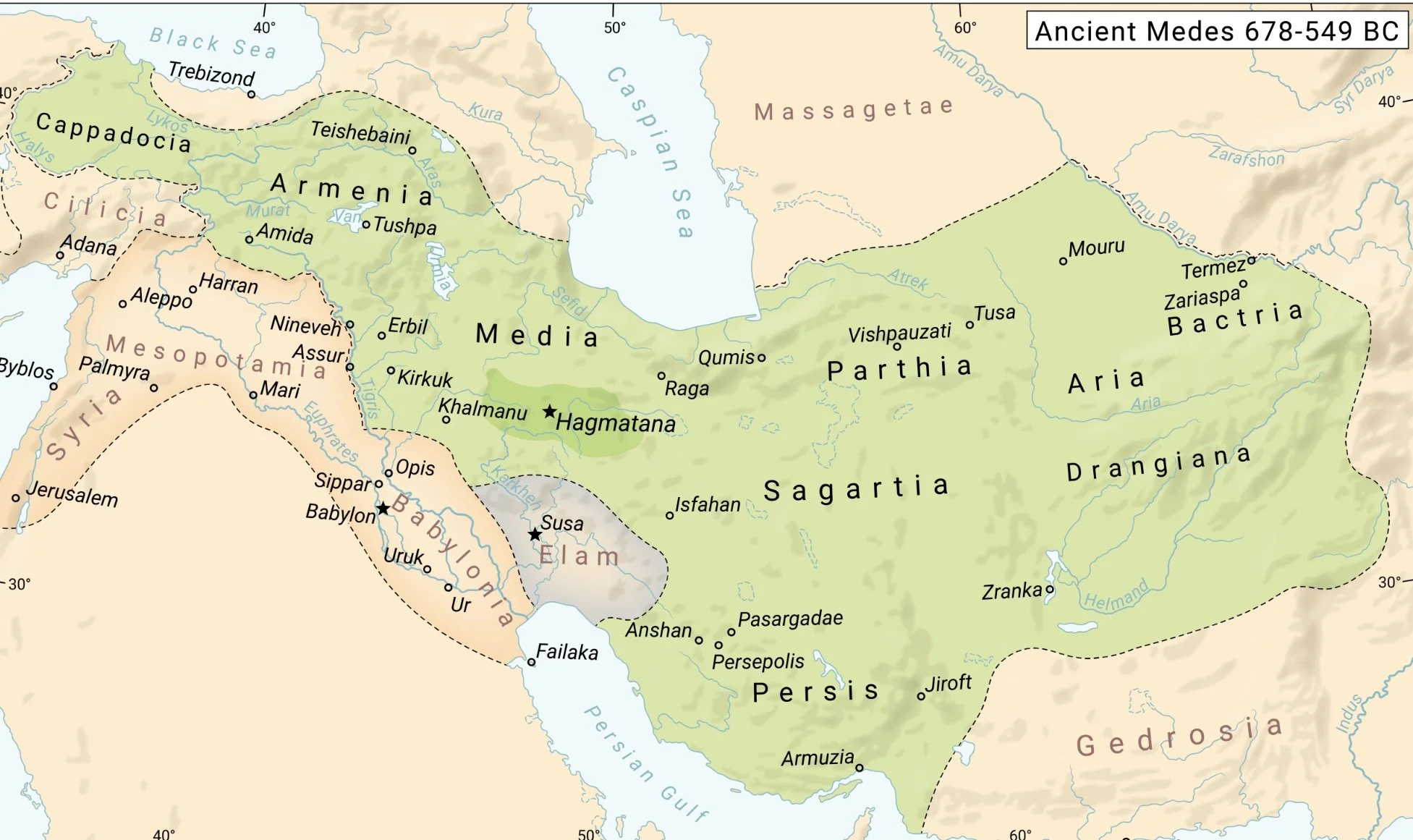
MEDES EMPIRE
Cattette, CC BY 4.0 <https://creativecommons.org/licenses/by/4.0>, via Wikimedia Commons
As Elam declined, a new power was emerging on the Iranian plateau. The Medes were an ancient people who built a major empire in the region. Their capital, Hagmatana — known to the Greeks as Ecbatana and today as Hamadan — was located in western Iran. Their greatest king, Cyaxares, forged them into a major military power. He overthrew the Assyrian empire, destroying Nineveh, its capital, in 612 BC. The Medes went on to control a vast territory, stretching from modern Turkey in the west to modern Afghanistan in the east, as shown in the map.
Their westward expansion was halted at the 585 BC Battle of the Eclipse. The Medes were fighting the Lydians, a kingdom located in western Asia Minor — modern-day Turkey. Suddenly, in broad daylight, the sky darkened completely. A total solar eclipse stunned both sides. This was interpreted as a message from the gods, prompting the leaders to negotiate for peace.
The Medes were eventually overthrown by the Persians, a related people from the southern Iranian plateau. Their king, Cyrus II — known as Cyrus the Great — defeated the Median king around 550 BC, partly because the Median army defected to his side. Cyrus went on to conquer Babylon in 539 BC, establishing the Persian empire, which we will cover in the next article.
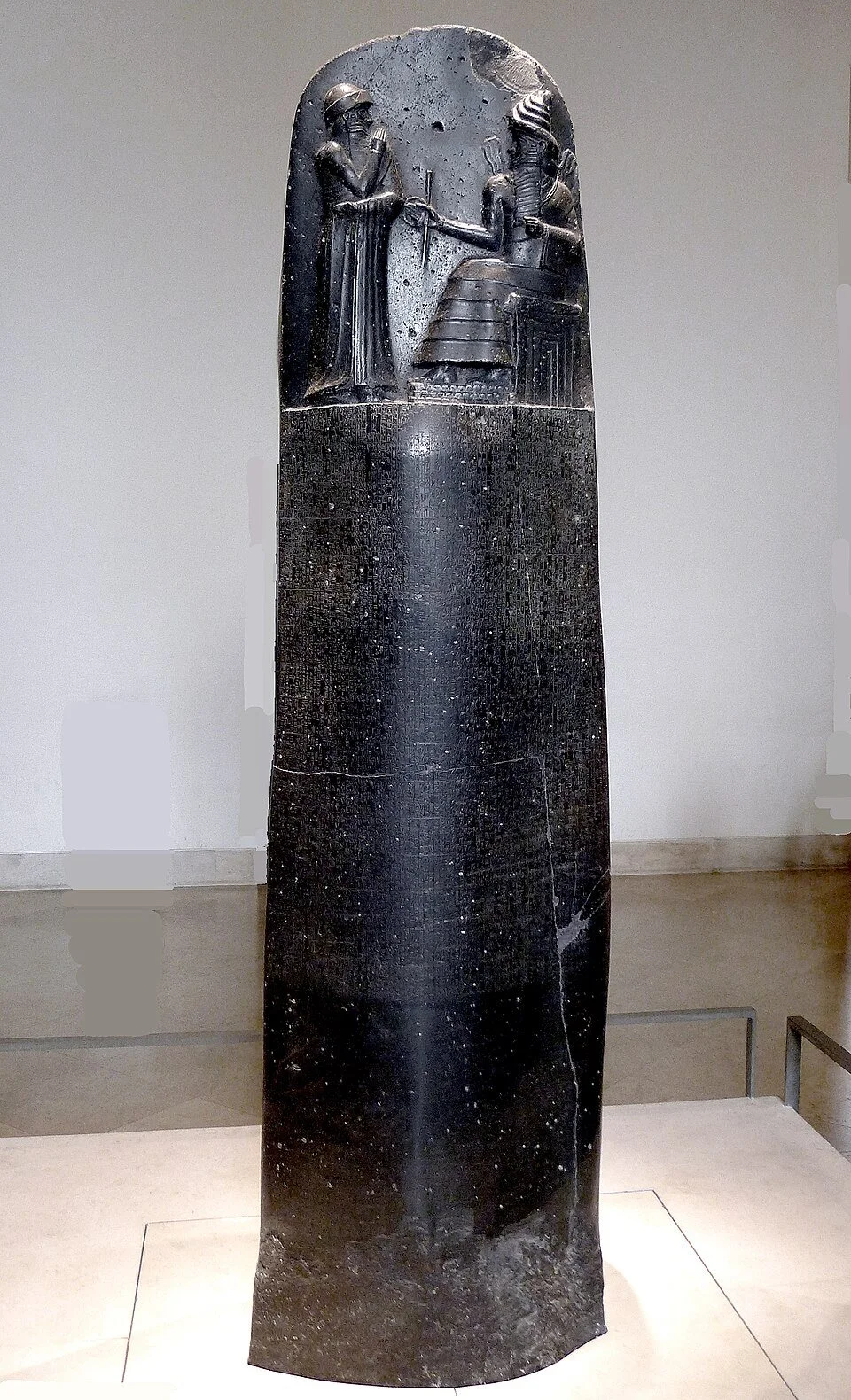
CODE OF HAMMURABI
CC BY 3.0 <https://creativecommons.org/licenses/by/3.0>, via Wikimedia Commons
*Hammurabi's Code was one of the earliest written legal codes in history, established by the Babylonian king Hammurabi around 1,750 BC.