History of Iran - Part 23
The doomed love affair has inspired literature for centuries. Two people fall deeply in love. But they are not allowed to pursue their love. They grow increasingly desperate, and their lives end tragically, sometimes in the death of one or both.
The Roman poet Ovid, in his Metamorphoses (written around 8 CE), tells of the Babylonian lovers Pyramus and Thisbe. Their parents forbid them to marry, so they talk through a crack in a wall and finally agree to meet outside the city. Thisbe arrives first and flees from a lioness, leaving her cloak behind. Pyramus finds the bloodied cloak, assumes a beast has killed her, and kills himself with his sword. Thisbe returns, finds him dying, and kills herself with the same sword.
Shakespeare's Romeo and Juliet follows the same pattern. Two young people fall in love but must marry in secret because they belong to rival families. To avoid an arranged marriage, Juliet takes a potion that makes her appear dead. Romeo finds her apparently lifeless body and poisons himself. When Juliet awakens, she sees Romeo dead and kills herself with his dagger.
Layla and Majnun
This brings us to the story of Layla and Majnun. The legend began in Arabia, probably in the 7th century, and belongs to a genre of Arabic love poetry called Udhri, whose stories center on chaste, unrequited love. In the typical tale, a young man falls in love with a girl, but her father refuses the match and marries her to someone else. The lovers are kept apart and remain chaste for life, expressing their feelings only in poetry. Driven to despair, the young man wanders alone in the desert, composing verses to his beloved.
Early anecdotes about the story appear in the Kitab al-Aghani (The Book of Songs), a 10th-century collection by the scholar Abu al-Faraj al-Isfahani. There, Qays ibn al-Mulawwah falls in love with Layla. When they are not allowed to marry, he becomes a majnun (Arabic for "possessed" or "madman") and lives in the desert, writing poetry to her. A poem attributed to him begins (in Dina Al-Mahdy's translation - click here for full translation):
If I had two hearts I would live with one,
And devote the other to torment in your love.
In 1188, the Persian poet Nizami was asked by the Shirvanshah Akhsitan, a ruler in the eastern Caucasus, to write a new version of the story. All of the verses below are from James Atkinson's 1836 English translation (reissued in 1894). Early in the poem, Layla's beauty is described:
Her graceful form in simple garb arrayed :
Bright as the morn, her cypress shape, and eyes
Dark as the stag's, were viewed with fond surprise ;
And when her cheek this Arab moon revealed,
A thousand hearts were won;
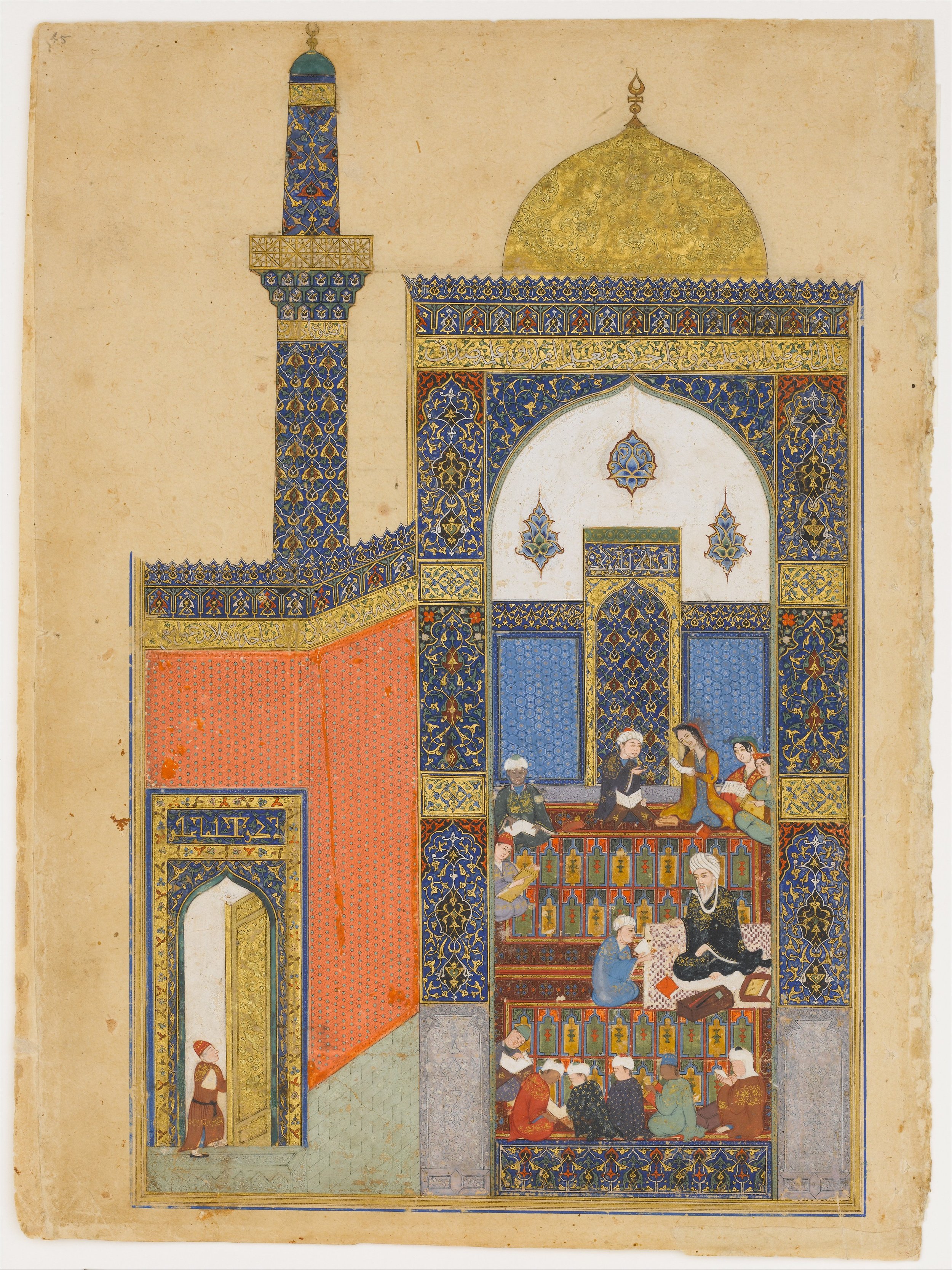
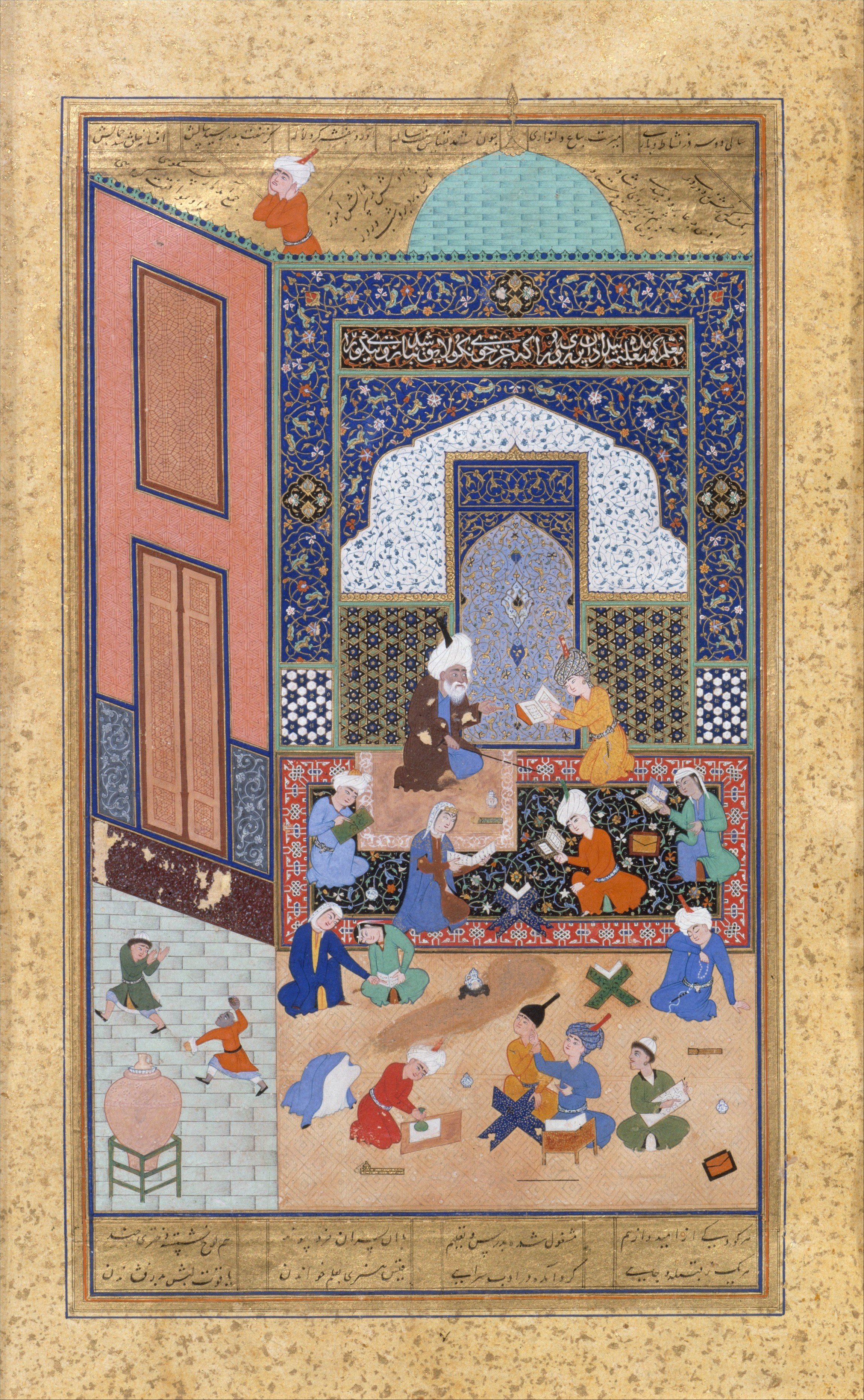
In Nizami's version, the two meet as schoolchildren and fall in love:
He sought to woo her, but he knew not how:
He gazed upon her cheek, and, as he gazed,
Love's flaming taper more intensely blazed.
Soon mutual pleasure warm'd each other's heart ;
Love conquer'd both — they never dreamt to part ;
While other schoolmates for distinction strove,
And thought of fame, they only thought of love :
They wanted to keep their love secret:
Immersed in love so deep,
They hoped suspicion would be lulled asleep,
And none be conscious of their amorous state ;
They hoped that none with prying eye,
And gossip tongue invidiously,
Might to the busy world its truth relate.
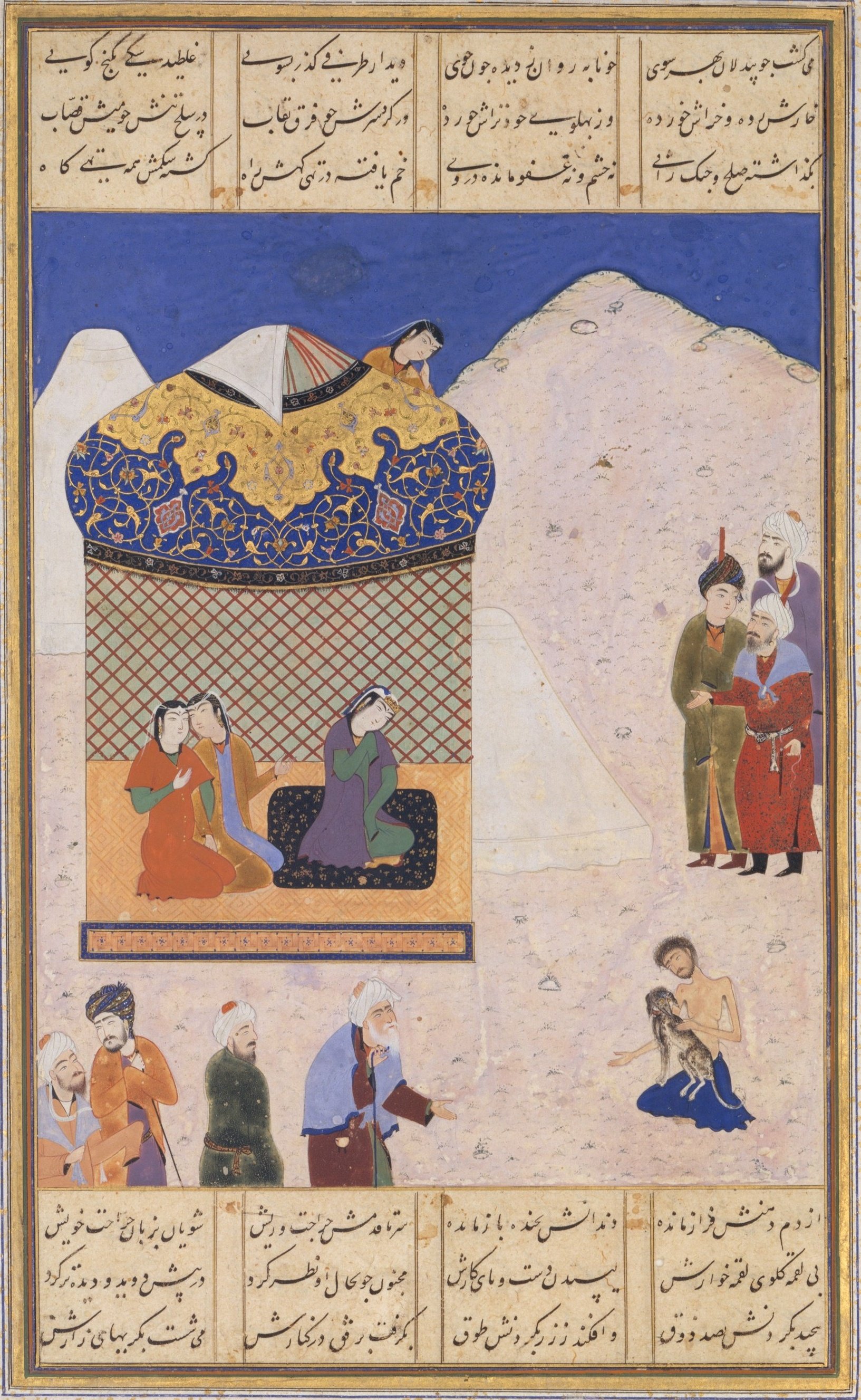
But Layla's father forbids the match. In despair, Majnun withdraws into the desert and composes poems to her. Layla is married against her will to another man, but the marriage is never consummated. The lovers meet in secret but exchange only poetry. When Layla's husband dies, the lovers still cannot be united. Layla dies of grief and is buried in her bridal dress. Hearing the news, Majnun rushes to her grave and dies there. They are buried side by side.
She whom I loved, than life itself more dear,
My friend, my angel-bride, is buried here!
…
Here lies my life's sole treasure, life's sole trust ;
All that was bright in beauty gone to dust!
…
Still weeping, bitter, bitter tears he shed,
As grovelling in the dust his hands he spread
In holy prayer. 'O God! Thy servant hear!
And in Thy gracious mercy set him free
From the afflictions which oppress him here.
That, in the Prophet's name, he may return to Thee!'
Thus murmuring, on the tomb he laid his head,
And with a sigh his wearied spirit fled.
Pattie Boyd
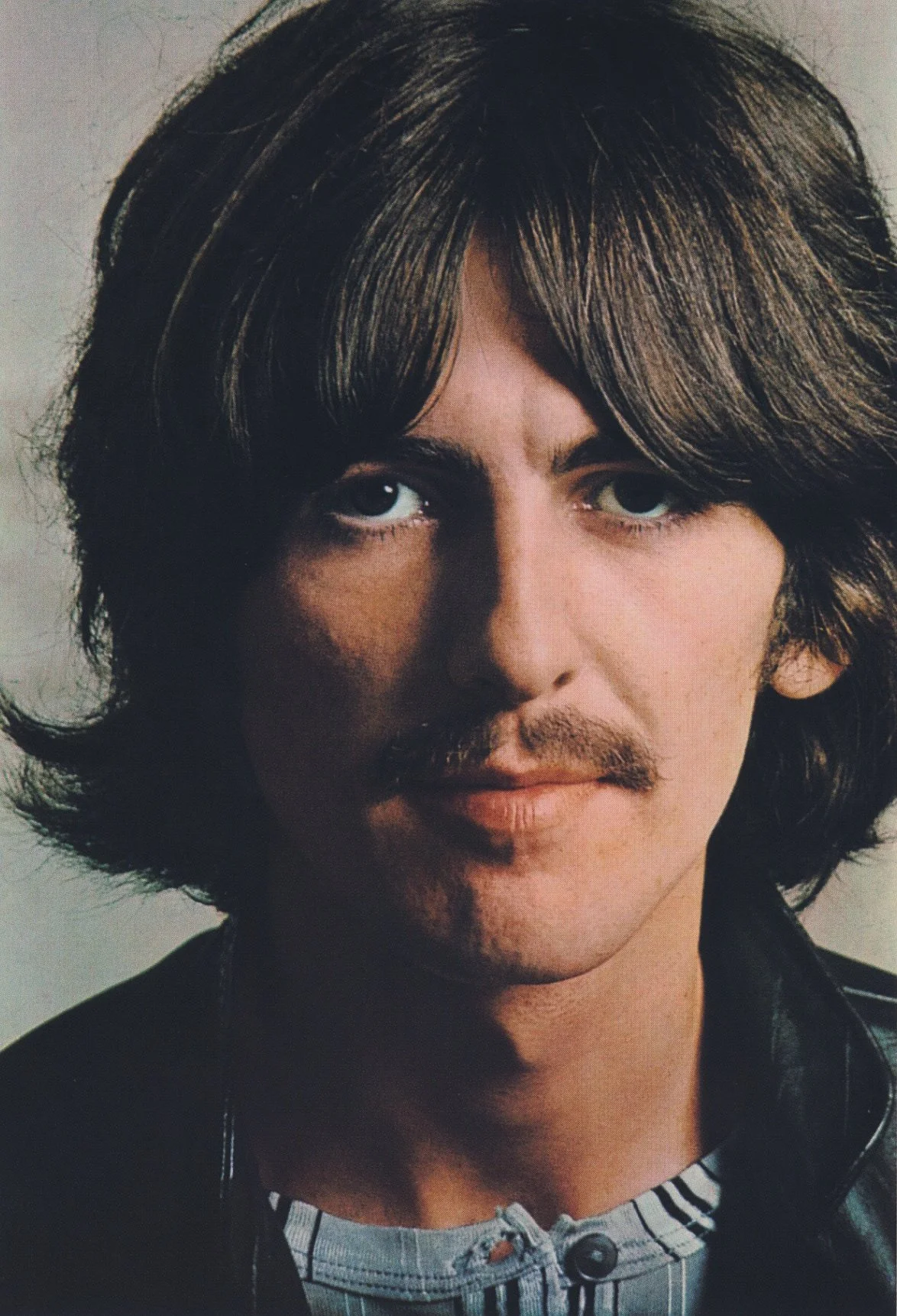
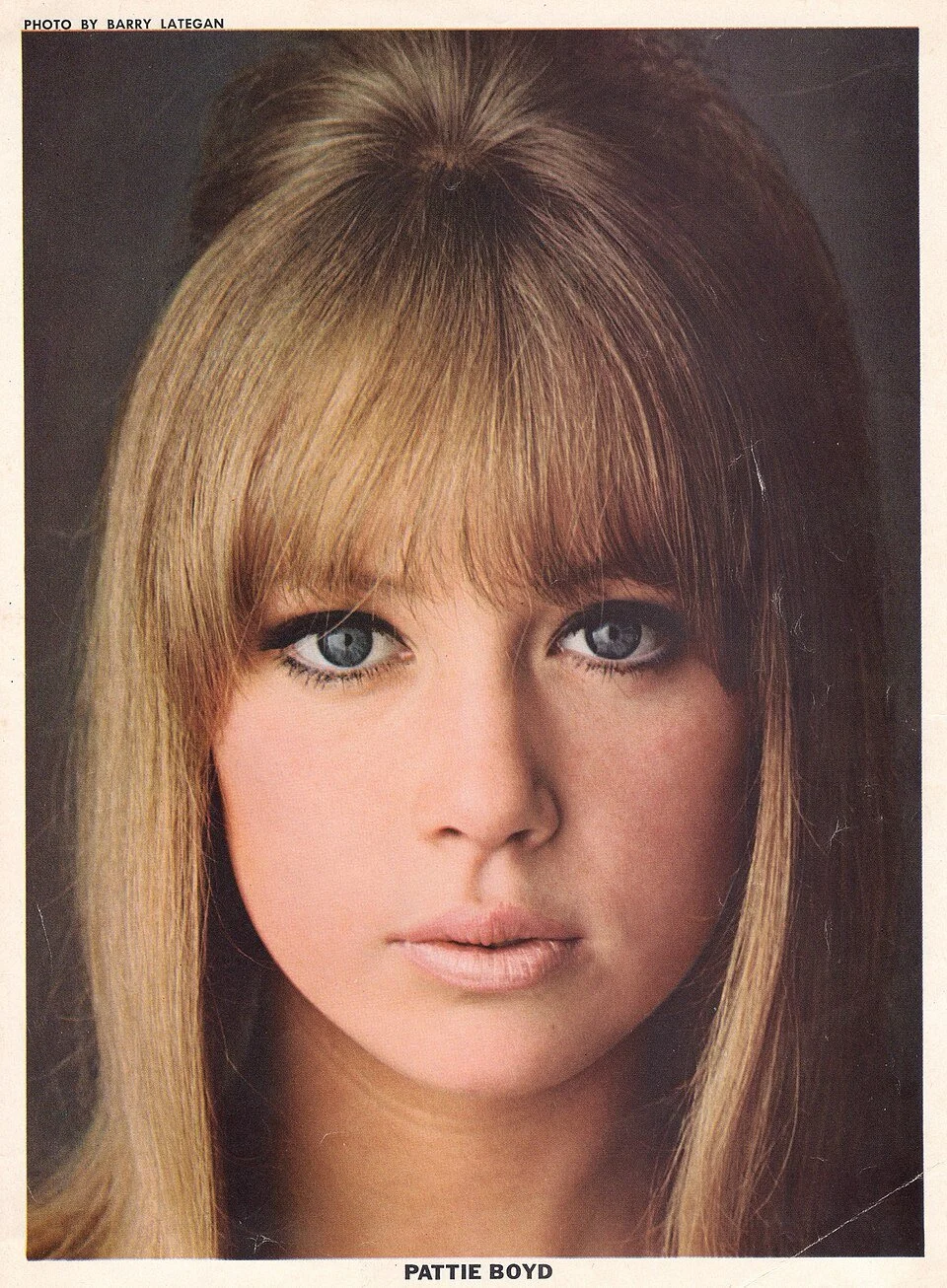
Pattie Boyd was a well-known British fashion model who appeared in magazines and advertisements. She met George Harrison when she landed a small part as a schoolgirl in the Beatles' 1964 film A Hard Day's Night. Harrison asked her on a date, but she turned him down because she was dating someone else. She later ended that relationship and accepted Harrison's dinner invitation. They married in January 1966; she was 21 and he was 22. Harrison's love song "Something" is widely associated with her, although he later said it was about the Hindu deity Krishna.
Love Triangle
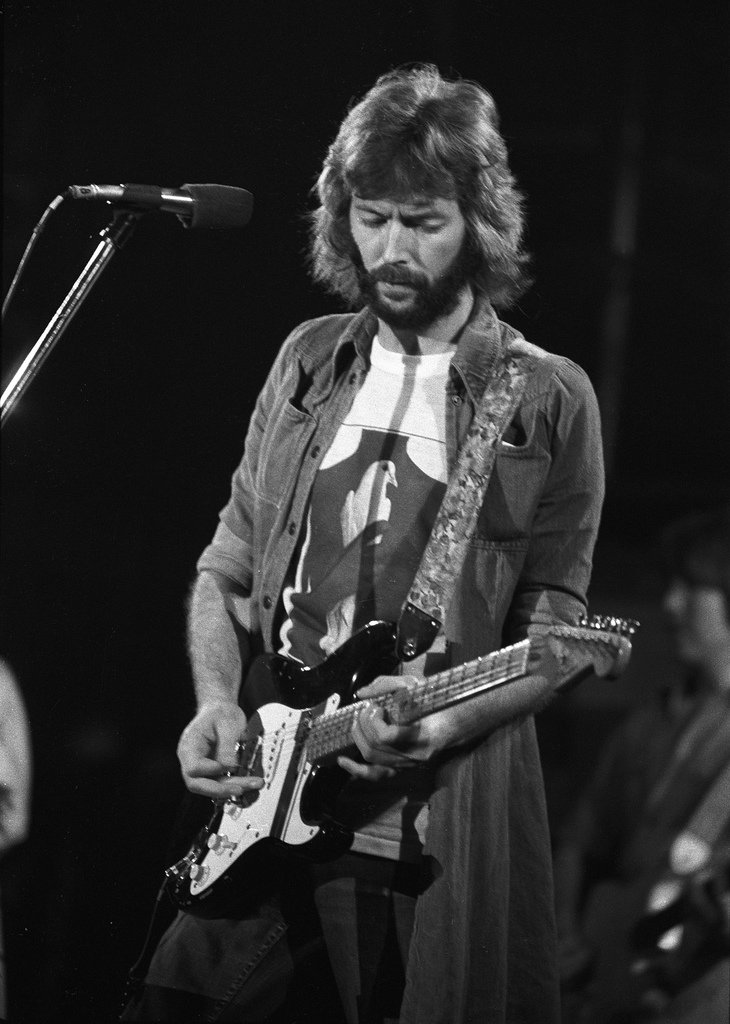
Being married to a Beatle during Beatlemania could not have been easy. The couple had no children, and Boyd has said that Harrison cheated on her. While they didn’t immediately divorce, they drifted apart. Meanwhile, Eric Clapton was a good friend of Harrison's, who had invited him to play guitar on his 1968 song "While My Guitar Gently Weeps." Clapton fell deeply in love with his friend's wife. Around this time, Ian Dallas, a Scottish playwright and actor and a friend of Clapton's, gave him a copy of Layla and Majnun. Clapton felt the story mirrored his love for Pattie and wrote a song expressing it. He named it "Layla," and it appeared on an album released in 1970. In the song's chorus, Clapton, brought to his knees, pleads with "Layla" to ease his worried mind, echoing the desperation of Nizami's love-stricken poet.
Clapton's heroin problems began around this time. In her memoir, Boyd writes that Clapton told her he would turn to drugs if she did not return his love. But now the stories diverge. Layla and Majnun share a chaste, lifelong love that ends in death. The rock-and-roll story takes a different path.
The Soap Opera
Much of what follows comes from three memoirs published in 2007: Pattie Boyd's Wonderful Tonight (written with Penny Junor), Eric Clapton's Clapton: The Autobiography, and Ronnie Wood's Ronnie.
When Clapton fell in love with Pattie Boyd, he had been dating her sister, Paula. Not directly related to this story, but Pattie's other sister, Jenny Boyd, inspired Donovan's 1968 hit "Jennifer Juniper" and later married Mick Fleetwood of Fleetwood Mac, twice.
According to Boyd's memoir, Harrison had an affair in 1969 with the French model Charlotte Martin, who had been Clapton's girlfriend. Martin later had a daughter with Led Zeppelin's Jimmy Page. Boyd has called Harrison's later affair with Maureen Starkey, Ringo Starr's first wife, the final straw. And the story wouldn't be complete without noting that, according to his memoir, Rolling Stones guitarist Ronnie Wood had an affair with Pattie Boyd. Meanwhile, Wood's wife, Krissy Findlay, had a fling with Harrison and later lived with Page.
So I wouldn't call this a love triangle between Clapton, Harrison, and Boyd. It's more like a love dodecagon when you add in Jenny Boyd, Paula Boyd, Mick Fleetwood, Charlotte Martin, Jimmy Page, Ronnie Wood, Maureen Starkey, Ringo Starr, and Krissy Findlay!
The Rock and Roll Classic
Derek and the Dominos made only one studio album, Layla and Other Assorted Love Songs. The album cover is a painting, La Jeune Fille au Bouquet ("The Young Girl with a Bouquet"), by the French artist Émile Théodore Frandsen de Schomberg, painted in the early 1950s. While in the south of France in 1970, Clapton saw the painting and thought it resembled Pattie Boyd, his Layla, who was still married to Harrison. He acquired it from the artist's son. Ironically, Clapton later gave the painting to Harrison, who gave it to Boyd, who sold it at auction in 2024 for nearly £2 million (about $2.5 million).
On the album, Clapton also credited Nizami as co-lyricist of the song "I Am Yours." "Layla" is credited to Clapton and drummer Jim Gordon, and Rolling Stone magazine ranked it as the 27th best song on its 2004 list of the 500 Greatest Songs of All Time.
If you wish to listen to the song, click the video link which shows the album cover.
In 1992, Clapton recorded an unplugged version, which won the 1993 Grammy for Best Rock Song.
Aftermath
Boyd and Harrison divorced in 1977. Clapton married his "Layla" in 1979, and they divorced in 1989. Pattie developed a second career as a photographer and wrote a bestselling memoir, Wonderful Tonight (titled Wonderful Today in the UK).
Five Poems
Nizami wrote in Persian, and Layla and Majnun was the third of his five long poems, collectively called the Khamsa, or "Quintet." The Khamsa became a model for Persian literature. Along with the Shahnameh, the Khamsa was among the most frequently illustrated works in Persian literature.
These illustrations are in the public domain, courtesy of the Metropolitan Museum of Art.