To the Victor Goes the Spoils - Part 5
The recent Netflix series, ‘Death by Lightning,’ covered the life and death of President Garfield and his assassin, Charles Guiteau. A significant issue at the time was governmental corruption through the patronage (spoils) system. Guiteau himself was a disappointed job seeker - he wanted a job in the Garfield administration.
Parts 1 through 4 of this multi-part series covered the history of the spoils system, starting with its origins under President Andrew Jackson, continuing with the numerous scandals during President Grant’s terms, through the start of reform under President Rutherford Hayes, and the assassination of President Garfield. This final part of the series covers the passage of the Pendleton Civil Service Reform Act, the landmark Civil Service legislation.
President Garfield’s Final Days (July 2, 1881 – September 19, 1881)
While Garfield lay dying, the public received daily updates on his condition and prayed for his recovery. They also became aware that a disappointed office seeker had shot him. Several days after the assassination attempt, The New York Times editorialized, “The attempt upon the President’s life is the direct result of the spoils system…”
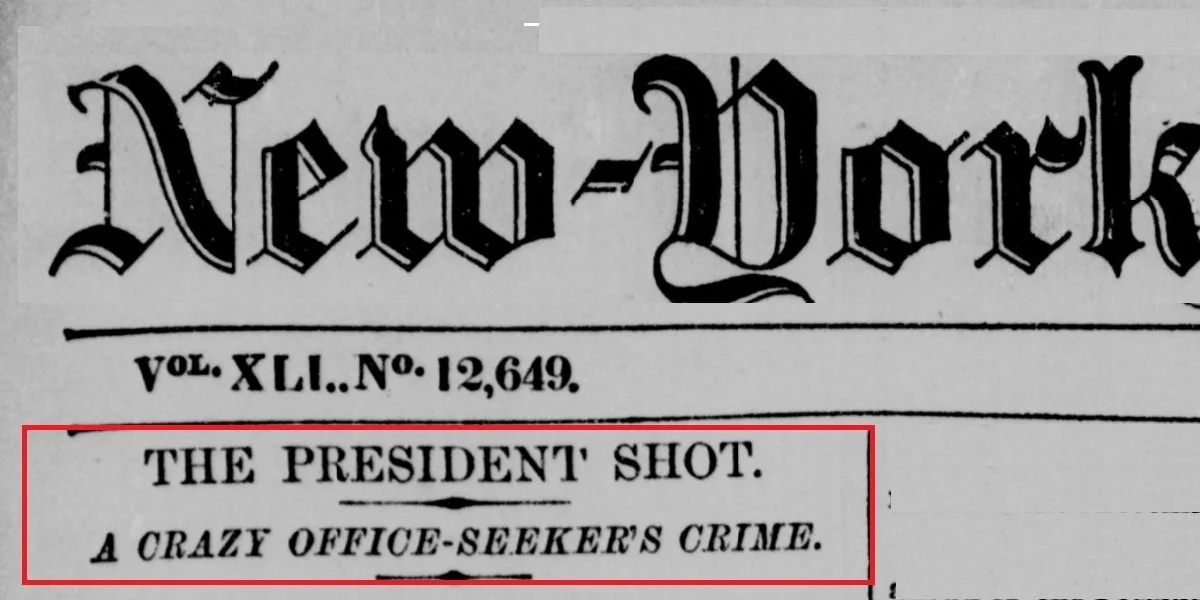
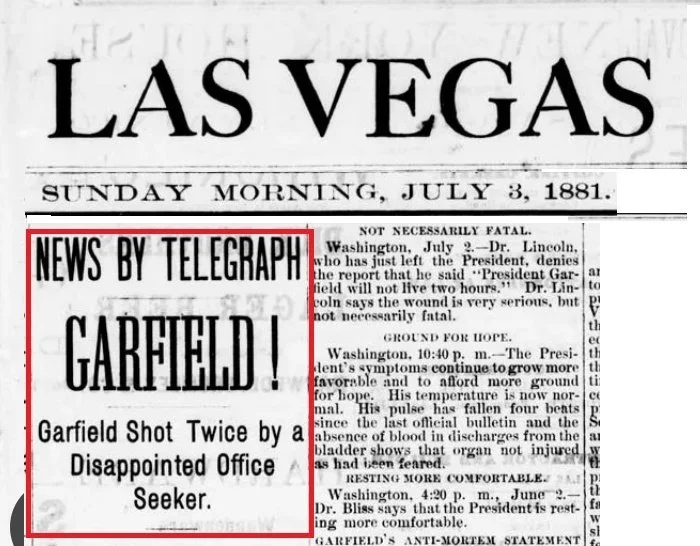

Garfield Memorial
The Chicago Tribune stated that, “the bullet that struck President Garfield yesterday was fired by the hand of Charles Guiteau, but the finger that pulled the trigger was guided by the spoils system…The assassin is a disappointed office-seeker, and the crime is one of the fruits of the accursed practice of turning public office into private plunder.”
The National Civil Service League, a non-profit organization, was formed in 1881, shortly after the assassination, to advocate for improvements in the Civil Service. They argued that the spoils system created an atmosphere that led to Garfield's assassination.
When Garfield died, after 79 days of hopes and prayers that he would live, the nation went into mourning. Mourners stood at trackside, heads bowed as the train transporting Garfield went by, and church bells tolled. Bridges and buildings were draped in black. Over 70,000 people waited as much as three hours in the Capitol Rotunda for up to walk past the open casket
Garfield was buried in Cleveland, where an estimated 200,000 people paid their respects. One newspaper called it, “The Most Impressive Funeral Ever Witnessed.”
The national outpouring of grief and anger at the reason for the murder provided momentum for the need for Civil Service reform.
President Chester Arthur (1881 – 1884)
As recounted in part 3 of this series, Arthur had overseen the New York Custom House, staffed with many patronage jobs. Arthur had been a member of the ‘Stalwarts,’ the party faction that supported the spoils system.
Surprising many, when he became President, Arthur supported Civil Service reform! It could be that Garfield’s murder changed his viewpoint. Or he recognized that the public wanted reform. In any case, in December 1881, two months after Garfield’s death, Arthur said, “No man should be the incumbent of an office the duties of which he is for any cause unfit to perform; who is lacking in the ability, fidelity, or integrity which a proper administration of such office demands…appointments should be based upon ascertained fitness.”
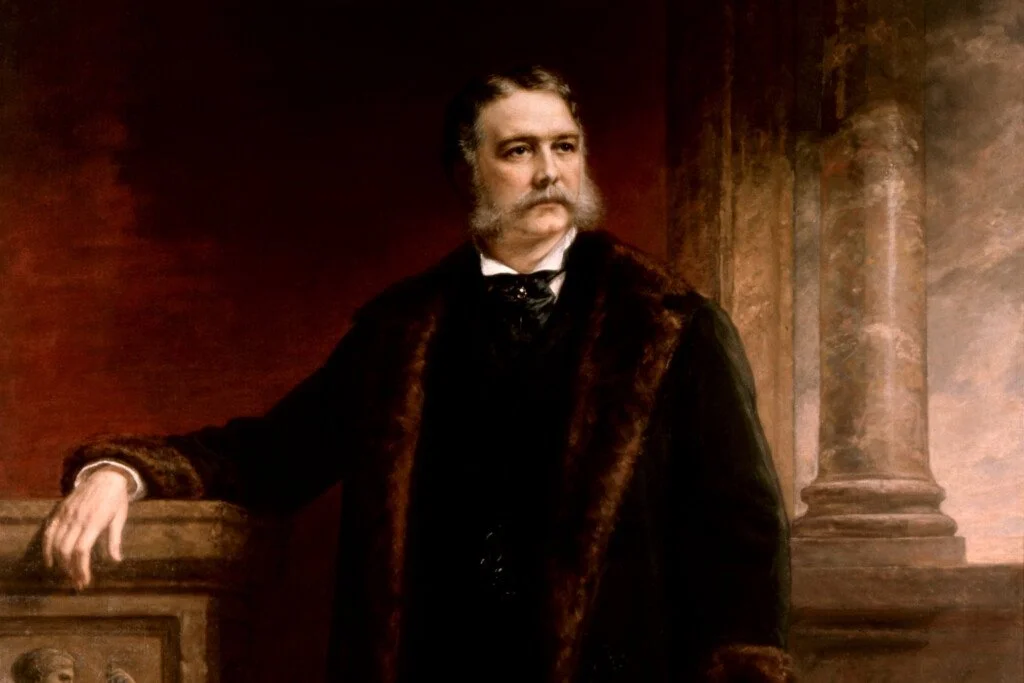
Chester Arthur
Congress was considering implementing competitive exams for Federal jobs, modeled after the British Civil Service. Arthur backed legislation: “If Congress should deem it advisable at the present session to establish competitive tests for admission to the service, [I shall give] the measure my earnest support.”
In the spring of 1882, Senator George H. Pendleton of Ohio introduced the Civil Service Reform Act, which bears his name. Debate over the bill continued throughout the summer. In December of 1882, Arthur endorsed the legislation: “I declared…that if the proposed measures should prove acceptable to Congress, they would receive the unhesitating support of the Executive.”
He acknowledged public support for reform and urged action: “…there has meanwhile been an increase in the public interest in that subject, and the people of the country, apparently without distinction of party, have in various ways and upon frequent occasions given expression to their earnest wish for prompt and definite action. In my judgment, such action should no longer be postponed.”
He also supported a prohibition of forced campaign contributions by Federal employees: “It goes without saying that such contributions are not voluntary, and in my judgment their collection should be prohibited by law. A bill which will effectually suppress them will receive my cordial approval.”
The Pendleton bill passed by large margins. The vote was 38–5 in the Senate and 155–47 in the House. Arthur signed it into law on January 16, 1883.
The provisions of the bill included:
· Federal jobs were awarded based on competitive examinations
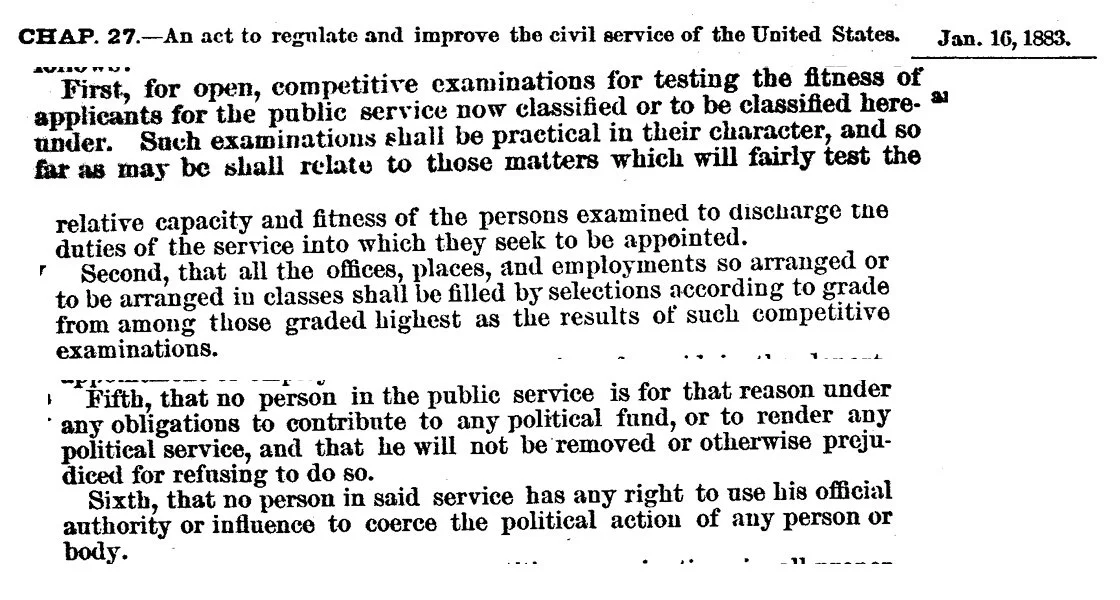
Congressional Record - Pendleton Act
· Employees covered by the act could not be fired for political reasons
· Employees could not be forced to make political contributions
· Jobs were open to all without regard to politics, religion, race, or national origin
Initially, the bill applied to about 10% of the Federal workforce. Over the years, successive Presidents expanded its scope until it now covers over 90% of Federal jobs.
The law is still in effect to this day.
Although Garfield served only four months as President, his legacy of reform still lives over 140 years later. Guiteau was found guilty of murder and hanged on June 30, 1882. His bullet not only killed Garfield but also led to the end of the spoils system. Garfield claimed that he was not guilty of murder, saying the medical treatment ultimately was responsible for the President’s death. The Court rejected this defense.
Arthur, dying of kidney disease, declined to run again in 1884, telling an aide, “I do not think I could stand the strain of another campaign, even if the party wanted me, which it does not.”
Two relatively unknown Presidents ended a corrupt practice that had tainted our government for half a century. The bullet that killed Garfield also killed “to the victor belong the spoils.”