History of Iran - Part 7
The current situation in the Middle East has focused attention on Iran — a country whose history rivals that of any on earth, stretching back over 5,000 years and encompassing 29 UNESCO World Heritage sites. UNESCO (United Nations Educational, Scientific and Cultural Organization) defines a World Heritage Site as a landmark or area recognized for its outstanding cultural, historical, or natural significance and protected under an international treaty for the benefit of all humanity.
This is part 7 of a multi-part series that will examine that history.
Click here for a list of the articles in this series.
The Longest War
Some wars seem to go on forever. World War II lasted six years, starting with the German invasion of Poland in September 1939, until the Japanese surrender in September 1945. One could argue that the war lasted eight years, if you start with the Japanese invasion of China in 1937. Or 14 years, dating from the Japanese occupation of Manchuria in 1931.
Most of you are aware of the Hundred Years' War fought between England and France in the 14th and 15th centuries, which technically lasted 116 years. The combatants didn’t fight continuously during that time period – it was an intermittent conflict that spanned generations of kings, highlighted by the British victory at Agincourt and the French heroine Joan of Arc. The Hundred Years’ War isn’t even close to the longest conflict in history. The wars between Rome and Persia lasted almost 700 years. It started with the Parthian Empire and continued into its successor, the Sassanid Empire. This essay will cover the first three centuries of the conflict, between Rome and Parthia.
Rome Versus Parthia
Roman history and its personalities are well known. There is Caesar and his assassination by Brutus. Marc Antony, his relationship with Cleopatra, and his loss in the Civil War against Octavian. There is the dramatic fall of the Roman Empire, Shakespeare’s Roman plays, and the spread of Roman Catholicism.
But we know little of Parthia. I doubt if many could name any king of Parthia or major events in its history. Yet at the time, Parthia rivaled Rome in size and influence in the ancient world.
Death of Crassus and Carrhae (click to expand)
Classical Numismatic Group, Inc. http://www.cngcoins.com, CC BY-SA 2.5
Carrhae
The first major conflict between the empires occurred in 53 BCE. A Parthian Civil War pitted two brothers against each other after they had murdered their father, the king. The Romans may have seen an opportunity to weaken Parthia. Rome at the time was ruled by the first triumvirate – Caesar, Pompey, and Crassus. Crassus, seeking glory and prestige, invaded Parthia with a large army. The Battle of Carrhae was a crushing defeat for the Romans, as Parthian cavalry and archers decimated their legions. Crassus was killed. The Romans lost half their army. During the battle, the Parthian horsemen feigned a retreat. The Romans pursued. It was an ambush, and the Roman forces were destroyed. This tactic became known as the ‘Parthian shot,’ and is believed to be the origin of the phrase ‘parting shot.’ The defeat was one of the worst in Roman history and was the start of the centuries-long war between the two empires.
Antony and Augustus
Coin showing return of Roman standards, click to expand
By Sailko - Own work, CC BY 3.0
In 36 BCE, Mark Antony, fresh from his alliance with Cleopatra and at the height of his power, invaded Parthia with an army of 100,000 men, the largest Rome had ever sent east. The campaign was a catastrophe. He lost his siege equipment to a Parthian raid and was unable to take any fortified cities. He was forced to retreat and lost over a third of his men. Six years later, Antony killed himself after losing the war against Octavian for control of Rome. Octavian, who took the name Augustus, decided to make peace with Parthia. As part of the treaty, Parthia returned the Roman legionary standards. The legionary eagle, a golden standard carried into battle, was the sacred embodiment of a legion's honor. Losing one was considered a national disgrace. Augustus publicized this as a military triumph, minting coins in its honor. The Roman poet Horace celebrated the moment in his Odes (Odes IV, 15), writing of Caesar having 'given back our standards, torn from Parthian fane.' These standards, which had hung in a Parthian temple as trophies of Carrhae for thirty-three years, were finally returned.
Silk Road - click to expand
By Kaidor , CC BY-SA 4.0
The Silk Road
The Silk Road was a series of trade routes between China and Rome, and countries in between. It was established by the Han Chinese by 114 BCE. Chinese silk and other commodities, including spices, horses, porcelain, and tea, were traded. These products were highly valued by the Romans, especially silk, which they believed grew on trees. Hundreds of years later they finally learned it was spun from Chinese silkworm cocoons. Pliny the Elder complained in his Natural History about the fortune in Roman gold flowing east to pay for it, and separately, about Roman women wearing garments so sheer they left nothing to the imagination.
Parthia profited greatly from its position between China and Rome by controlling the trade routes, functioning as middlemen, and collecting fees. Those profits funded Parthia’s military, government, and public works.
Subsequent Wars
The Parthian wars against Rome continued. In 63 CE, the Treaty of Rhandeia gave Rome and the Parthians shared control over the buffer state of Armenia. In 114 CE, Rome invaded Parthia after another dispute over Armenia. Trajan’s desire for prestige and territorial growth may also have played a part in the war. Trajan’s campaign was initially successful, including the capture of the Parthian capital, Ctesiphon. The Roman forces were overextended; they needed to divert troops to deal with Jewish rebellions, and finally, Trajan’s death ended the campaign. Hadrian, Trajan’s successor, decided to withdraw from Parthian territory to more defensible borders.
Rome and Parthia fought again in 161 CE and 195 CE. In both cases, Rome took Ctesiphon but withdrew, unable to maintain its gains. The final battle of the Roman–Parthian wars occurred in 217 AD at the Battle of Nisibis, a bloody Parthian victory that led to significant reparations from the Romans. However, within ten years of that victory, the Parthian Empire fell.
Parthian Culture
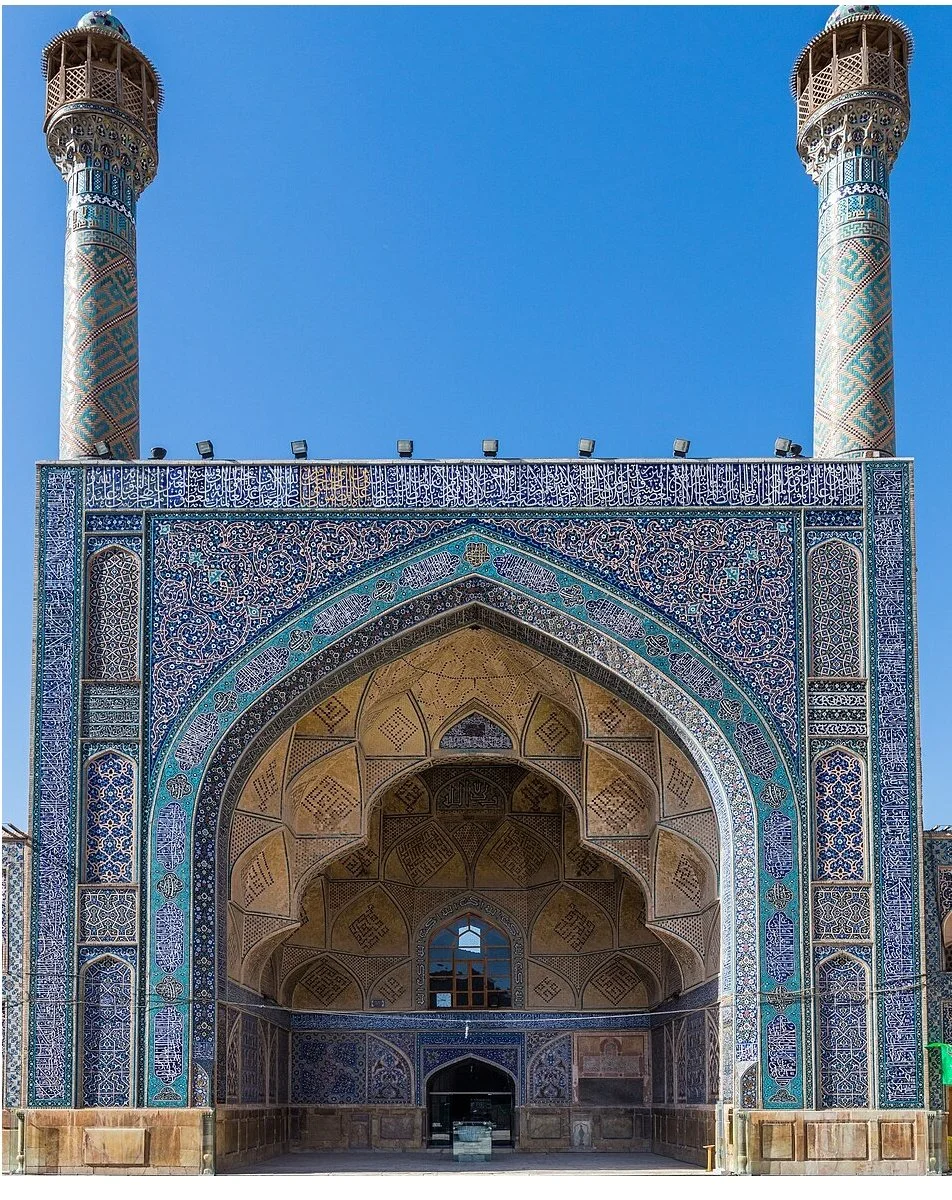
The Parthians made lasting contributions to architecture, art, and religion. They developed the iwan, an open-fronted vaulted hall, a style that continued well into the Islamic age. From palace complexes to mosques, the iwan can still be found across the Middle East to this day.
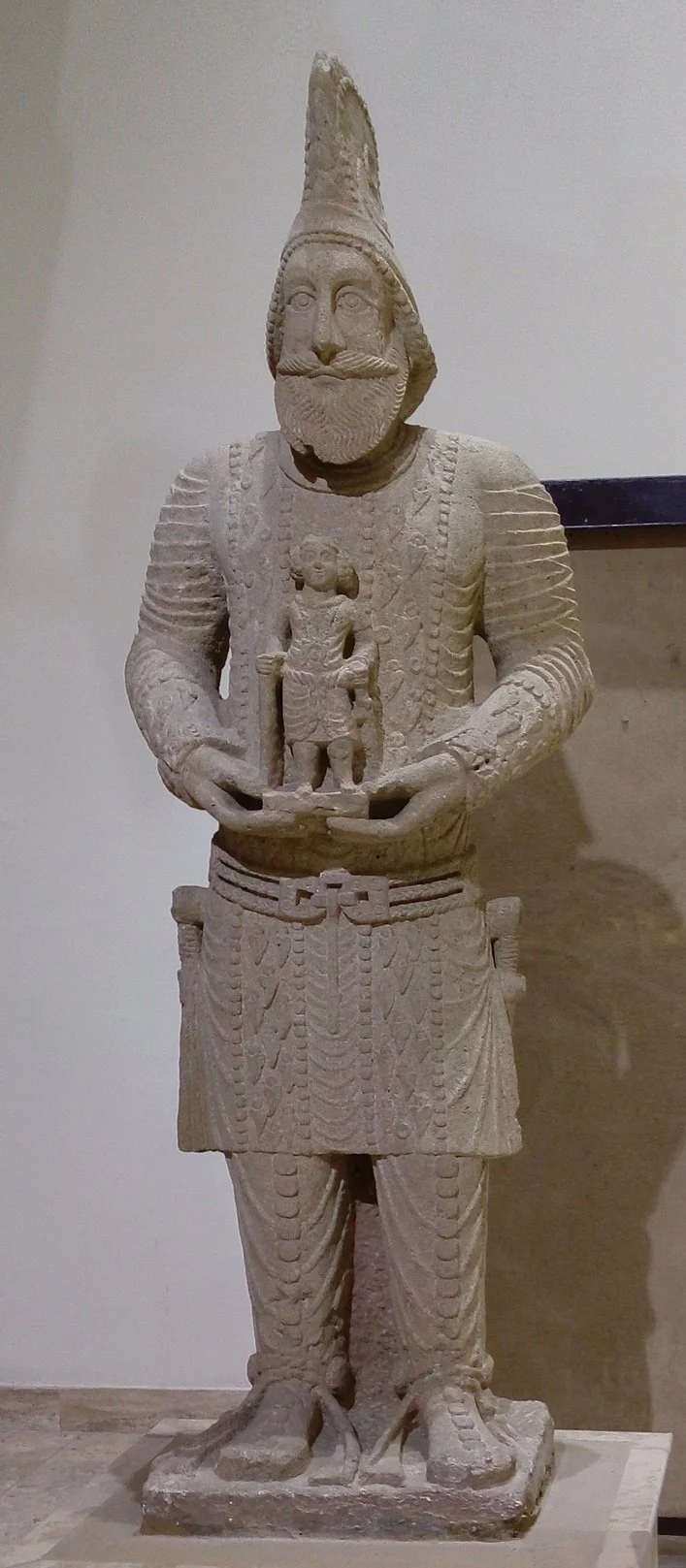
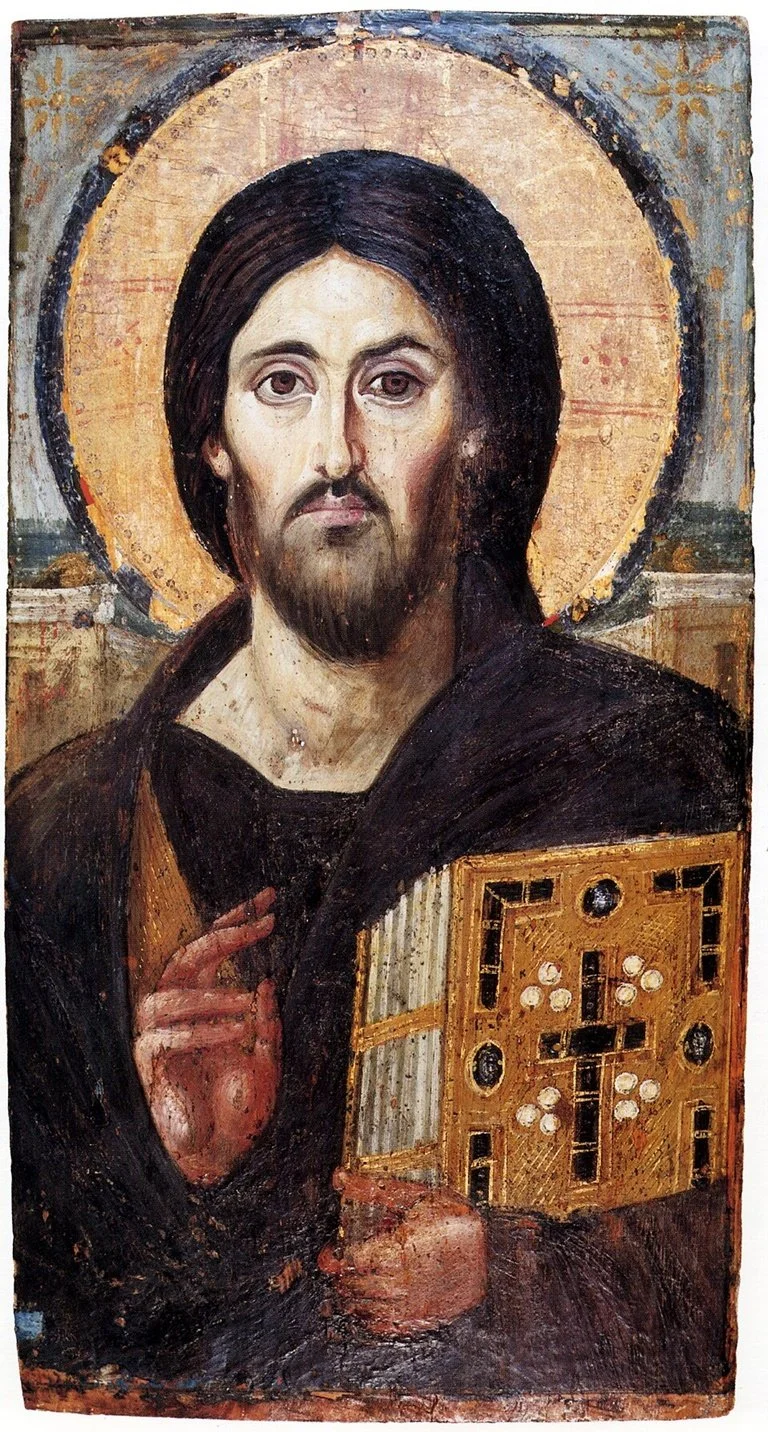
Parthian frontality is a defining feature of Parthian art, in which figures, whether human or divine, face directly forward, with eyes fixed on the viewer. This frontal view continued into Byzantine and European medieval art.
Religious tolerance was a Parthian hallmark, echoing the tradition established by Cyrus the Great and the Achaemenids. Jews, early Christians, Zoroastrians, and Buddhists all practiced freely within the empire. The Talmud, one of the foundational texts of Judaism, was developed by Jewish scholars in Babylonia during the Parthian period, a reminder that the Jewish diaspora communities first established when Nebuchadnezzar destroyed Jerusalem were still flourishing five centuries later. Buddhism reached China via the Parthian-controlled Silk Road, demonstrating that ideas traveled alongside trade goods.
Decline and Fall of Parthia
Parthia started to decline for several reasons. Local rulers gained power at the expense of the central government. Roman attacks put pressure on the empire. And finally, succession disputes after a king's death led to internal civil wars.
Ardashir, a local ruler, overthrew Artabanus IV, the last Parthian king, and established the Sasanid dynasty in 224 CE. He was from the Achaemenid home province of Persis (Fars). They ruled Iran for over 400 years until the Islamic conquest. As we’ll see in the next essay in this series, the struggle against Rome continued.
* Pliny the Elder was the author of ‘Natural History,’ an encyclopedic series of books about Rome, published around 77 AD